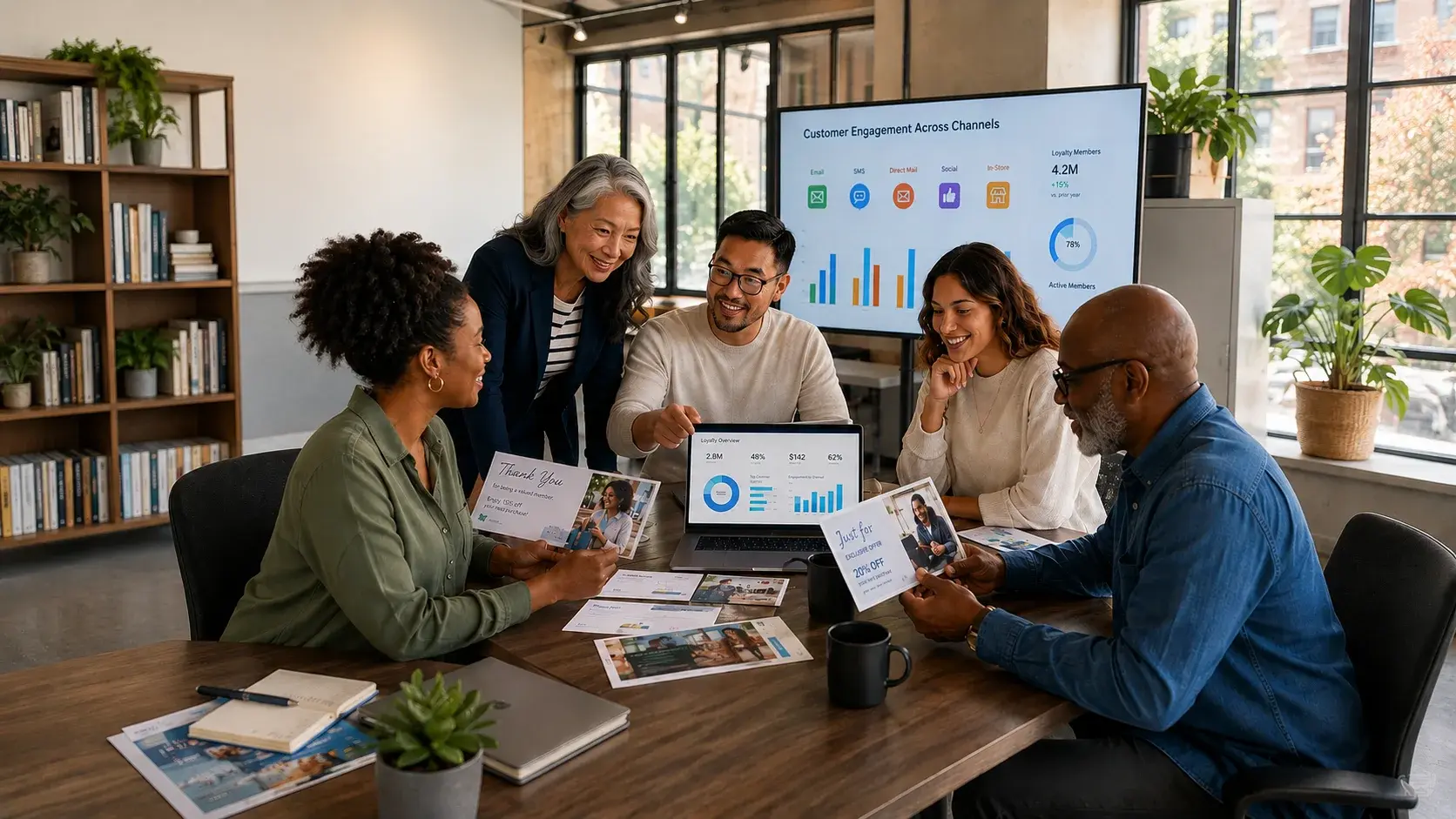
Customer loyalty strategies help brands increase retention, strengthen repeat purchase behavior, and improve long-term customer value through personalized and connected experiences. Today’s leading brands use customer retention strategies, lifecycle marketing, and omnichannel engagement to build stronger customer relationships across every stage of the customer journey.
The reality is this: loyalty is no longer just a rewards program. A modern loyalty marketing strategy connects customer data, personalized communication, and coordinated engagement across digital and physical channels.
TL;DR
Customer loyalty strategies help brands increase retention, repeat purchases, and customer lifetime value through personalized and connected customer experiences. The most effective loyalty strategies combine customer data, omnichannel engagement, automation, and lifecycle marketing to create stronger long-term relationships.
Leading brands improve loyalty by:
- Using first-party customer data for personalization
- Connecting email, mobile messaging, and direct mail
- Automating lifecycle communication
- Segmenting customers based on behavior
- Measuring retention and repeat purchase performance
- Creating consistent experiences across channels
Brands that treat loyalty as an ongoing customer relationship strategy instead of a standalone rewards program are better positioned to improve retention and long-term revenue growth.
What Are Customer Loyalty Strategies?
Customer loyalty strategies are structured approaches brands use to increase customer retention, repeat purchases, and long-term customer value. These strategies combine personalized messaging, customer rewards programs, lifecycle marketing, and omnichannel engagement to keep customers connected to the brand over time.
Strong customer loyalty strategies typically include:
- Personalized customer experiences
- Customer rewards programs
- Omnichannel customer engagement
- Customer retention automation
- Loyalty marketing automation
- Customer behavior segmentation
- First-party customer data strategies
- Lifecycle-based messaging and offers
The biggest misconception is that loyalty starts after a purchase. In reality, loyalty begins during the first interaction a customer has with a brand.
Every touchpoint contributes to the customer loyalty lifecycle, including:
- Welcome messaging
- Post-purchase communication
- Customer service interactions
- Product recommendations
- Direct mail and mobile messaging
- Rewards and retention campaigns
Brands that connect these experiences consistently are more likely to build emotional brand loyalty and long-term engagement.
At Baesman, this connected approach is foundational to how brands improve retention, loyalty program engagement, and customer lifetime value through integrated customer loyalty strategies, customer engagement strategy and analytics, and coordinated omnichannel execution.
Why Are Customer Loyalty Strategies More Important Than Ever?
Customer acquisition costs continue to increase across digital channels. Retention has become one of the most important drivers of sustainable revenue growth.
Existing customers typically:
- Purchase more often
- Spend more over time
- Respond better to personalized messaging
- Have higher engagement rates
- Cost less to retain than acquiring new customers
The challenge is that customer expectations have changed. Customers now expect brands to recognize behaviors, preferences, and purchase history across every interaction.
A disconnected experience creates friction. A connected experience builds trust.
This is why leading brands are investing in:
- Personalized loyalty marketing
- Customer loyalty analytics
- Customer retention automation
- Data-driven loyalty marketing
- Omnichannel loyalty strategies
The goal is not simply to send more promotions. The goal is to deliver relevant communication at the right moment in the customer lifecycle.
For many retail and consumer brands, this means integrating channels such as email, direct mail, and mobile messaging (SMS) into a coordinated retention and loyalty marketing strategy.
Baesman supports this type of integrated execution through services that connect CRM strategy, campaign execution, direct mail, and customer engagement programs like email and mobile messaging services.
What Makes a Modern Loyalty Marketing Strategy Effective?
An effective loyalty marketing strategy focuses on relevance, timing, and connected customer experiences.
The strongest loyalty programs are built around customer behavior instead of generic promotions.
Customer Data Segmentation Drives Better Engagement
Customer behavior segmentation allows brands to personalize communication based on:
- Purchase history
- Shopping frequency
- Product preferences
- Engagement behavior
- Loyalty tier status
- Inactivity periods
For example, repeat customers may receive early access offers or VIP messaging, while inactive customers may receive retention-focused campaigns designed to re-engage them.
This type of customer engagement personalization increases the likelihood of repeat purchases while improving loyalty program engagement.
The reality is this: personalization without data structure becomes inconsistent quickly.
That is why first-party customer data has become central to modern loyalty program strategy.
Brands that unify customer data across systems are better positioned to:
- Create consistent customer experiences
- Improve customer loyalty analytics
- Automate lifecycle communication
- Increase retention marketing performance
- Improve customer loyalty metrics over time
Omnichannel Customer Engagement Improves Retention
Customers do not think in channels. They think in experiences.
An effective omnichannel loyalty strategy creates continuity across:
- Email
- Mobile messaging
- Direct mail
- In-store interactions
- Ecommerce experiences
- Customer service touchpoints
For example, a customer may:
- Browse products online
- Receive a personalized email recommendation
- Receive a triggered direct mail piece
- Redeem an offer in-store
- Enter a loyalty rewards journey afterward
Each interaction builds on the previous one.
This coordinated approach creates a loyalty-driven customer experience rather than isolated marketing campaigns.
Brands looking to improve retention and customer engagement across channels can explore Baesman’s approach to retail marketing services, direct mail, and connected customer engagement execution.
Baesman helps brands execute these connected customer experiences across physical and digital channels through integrated marketing operations and customer engagement execution.
How Does Automation Improve Customer Retention?
Customer retention automation enables brands to deliver personalized messaging based on real customer behavior, rather than relying on manual campaign execution.
This improves consistency, speed, and relevance throughout the customer loyalty lifecycle.
Customer retention automation is most effective when messaging reflects real customer behavior. Instead of sending the same promotion to every customer, brands can automate communication based on browsing activity, purchase frequency, inactivity periods, loyalty status, or customer engagement signals.
Common loyalty marketing automation examples include:
- Welcome series after sign-up
- Post-purchase follow-up messaging
- Birthday and anniversary campaigns
- Loyalty points reminders
- Win-back campaigns for inactive customers
- Triggered direct mail campaigns
- VIP customer rewards communication
Automation also improves operational efficiency by reducing manual processes while maintaining personalization at scale.
The biggest mistake is treating automation as a technology project instead of a customer experience strategy.
The technology matters. But the customer journey matters more.
At Baesman, automation strategies are designed around customer behavior, lifecycle stages, and measurable retention outcomes rather than isolated campaign execution.
What Can Brands Learn From Real Loyalty Marketing Examples?
A strong example of connected loyalty and customer engagement strategy is Baesman’s work with American Girl.
American Girl needed to create highly personalized customer experiences while maintaining brand consistency across channels and customer touchpoints.
Baesman helped support these efforts through integrated customer communications, personalization, and operational execution that aligned marketing strategy with customer experience delivery.
The American Girl engagement strategy demonstrated how personalization, coordinated messaging, and operational execution can support loyalty at scale across both ecommerce and retail customer experiences.
The partnership demonstrates how loyalty strategies succeed when brands connect:
- Customer data
- Personalized messaging
- Physical and digital experiences
- Lifecycle communication
- Operational execution
Instead of treating loyalty as a standalone initiative, the experience becomes part of the broader customer relationship.
Explore the full American Girl case study to see how connected customer experiences can support long-term engagement and retention.
What Customer Loyalty Metrics Matter Most?
Measuring loyalty performance requires more than tracking program enrollment.
Strong customer loyalty analytics focus on long-term customer behavior and revenue impact.
Which Customer Loyalty Metrics Matter Most?
Key customer loyalty metrics include:
- Repeat purchase rate
- Customer lifetime value (CLV)
- Retention rate
- Loyalty program participation
- Reward redemption rate
- Average order value
- Purchase frequency
- Customer engagement rates
- Reactivation rates for inactive customers
The goal is not perfect attribution. It is clearer insight into what drives customer retention and repeat purchase behavior.
Brands should also evaluate how loyalty communication impacts broader business outcomes like:
- Revenue growth
- Customer engagement
- Retention performance
- Marketing efficiency
- Long-term customer value
For a deeper breakdown of retention-focused measurement strategies, read Baesman’s guide on how to measure customer loyalty.
Brands can also explore broader customer behavior and retention trends in Baesman’s State of Customer Loyalty Report.
Customer Loyalty Best Practices for Long-Term Success
The strongest customer loyalty strategies share several common characteristics.
Prioritize First-Party Customer Data
Reliable customer data improves personalization, segmentation, and campaign timing.
Connect Digital and Physical Experiences
Customers expect continuity across channels, including email, mobile messaging, direct mail, and in-store interactions.
Build Loyalty Around Customer Behavior
Behavior-driven engagement is more effective than generic campaign schedules.
Focus on Long-Term Relationships
Short-term discounts alone rarely build sustainable emotional brand loyalty.
Measure Retention Consistently
Retention metrics should connect back to customer lifetime value and repeat purchase performance.
The reality is this: loyalty is earned through consistent customer experiences over time.
Programs matter. Rewards matter. But long-term customer loyalty is built through relevance, personalization, and trust.
FAQ: Common Questions About Customer Loyalty Strategies
What are the most effective customer loyalty strategies?
The most effective customer loyalty strategies combine personalization, customer rewards programs, lifecycle marketing, and omnichannel engagement. Brands that use customer data to create relevant experiences across channels typically improve retention and repeat purchase behavior more effectively.
Why is customer retention important for loyalty marketing?
Customer retention directly impacts revenue growth and customer lifetime value. Retaining existing customers is often more cost-effective than acquiring new customers, especially as acquisition costs continue to increase across digital channels.
How does personalization improve customer loyalty?
Personalization improves customer loyalty by making communication more relevant to customer behavior and preferences. Personalized messaging, offers, and experiences help customers feel recognized and valued throughout the customer journey.
What role does automation play in customer loyalty?
Customer retention automation helps brands deliver timely and consistent communication based on customer behavior. Automation improves scalability while supporting personalized customer experiences across the loyalty lifecycle.
What metrics should brands track for loyalty programs?
Brands should monitor repeat purchase rate, customer lifetime value, retention rate, engagement metrics, reward redemption rates, and purchase frequency. These metrics provide insight into customer behavior and long-term retention performance.
Final Takeaway
Customer loyalty strategies are no longer limited to points and rewards. Leading brands build loyalty through connected customer experiences, personalized engagement, and coordinated lifecycle marketing across every channel.
The brands that succeed long term are the ones that treat loyalty as an ongoing customer relationship strategy supported by data, personalization, and operational execution.
If your brand is looking to improve customer retention, strengthen loyalty program engagement, and create more connected customer experiences across email, direct mail, and mobile messaging, explore Baesman’s Customer Loyalty Services.














.svg)