





-
Customer Strategy Services

Customer Analytics & Insights
Turn customer data into clear insights that improve targeting, campaign performance, and measurable growth.

Loyalty Program Design & Management
Build and manage loyalty programs that increase engagement, retention, and customer lifetime value.

CRM Channel Marketing & Management
Coordinate direct mail, email, and SMS strategies that reach the right customers and prove ROI.

Customer Lifecycle Marketing & Journey Mapping
Design connected journeys that move customers from acquisition to retention and repeat purchase.
Print & Marketing Execution

Direct Mail
Execute personalized direct mail campaigns that improve targeting, response rates, and measurable marketing ROI.

Email & SMS Marketing
Deliver timely, data-driven email and SMS campaigns that increase engagement, conversion, and customer retention.

In-Store Signage & All Things Print
Produce and deliver on-brand print, signage, and materials on time across every location.

Web-to-Print
Give teams one platform to order, customize, and control branded materials at scale.

Kitting & Fulfillment
Simplify complex distribution with accurate kitting, inventory control, and on-time delivery.
Branded Merchandise

Promotional Products & Branded Apparel
Curated, brand-right merchandise for campaigns, events, customer engagement, and everyday brand visibility.

Online Company Stores
Branded online stores that simplify ordering, inventory management and distribution across teams and locations.

Custom Kitting & Fulfillment
Custom kit assembly, warehousing, and reliable fulfillment for launches, events, employee programs, and customer campaigns.

Programs Built Around Your Goals
Brand-right merchandise solutions tailored to your audience, objectives, timeline and budget—from product selection through fulfillment.
-
-
-
.svg)
Why Baesman?
We combine data-driven strategy, seamless execution, and personalized support to help brands build more profitable customer relationships.

Data Security & Trust Center
See how Baesman protects customer data with secure processes, compliance standards, and a commitment to transparency.

Awards
Explore the recognition that reflects Baesman’s commitment to innovation, quality, service, and results.

Partners
Discover the technology and strategic partnerships that help Baesman deliver smarter, more connected marketing.

Careers
Join a team that values collaboration, growth, and doing the right thing for clients, teammates, and each other.
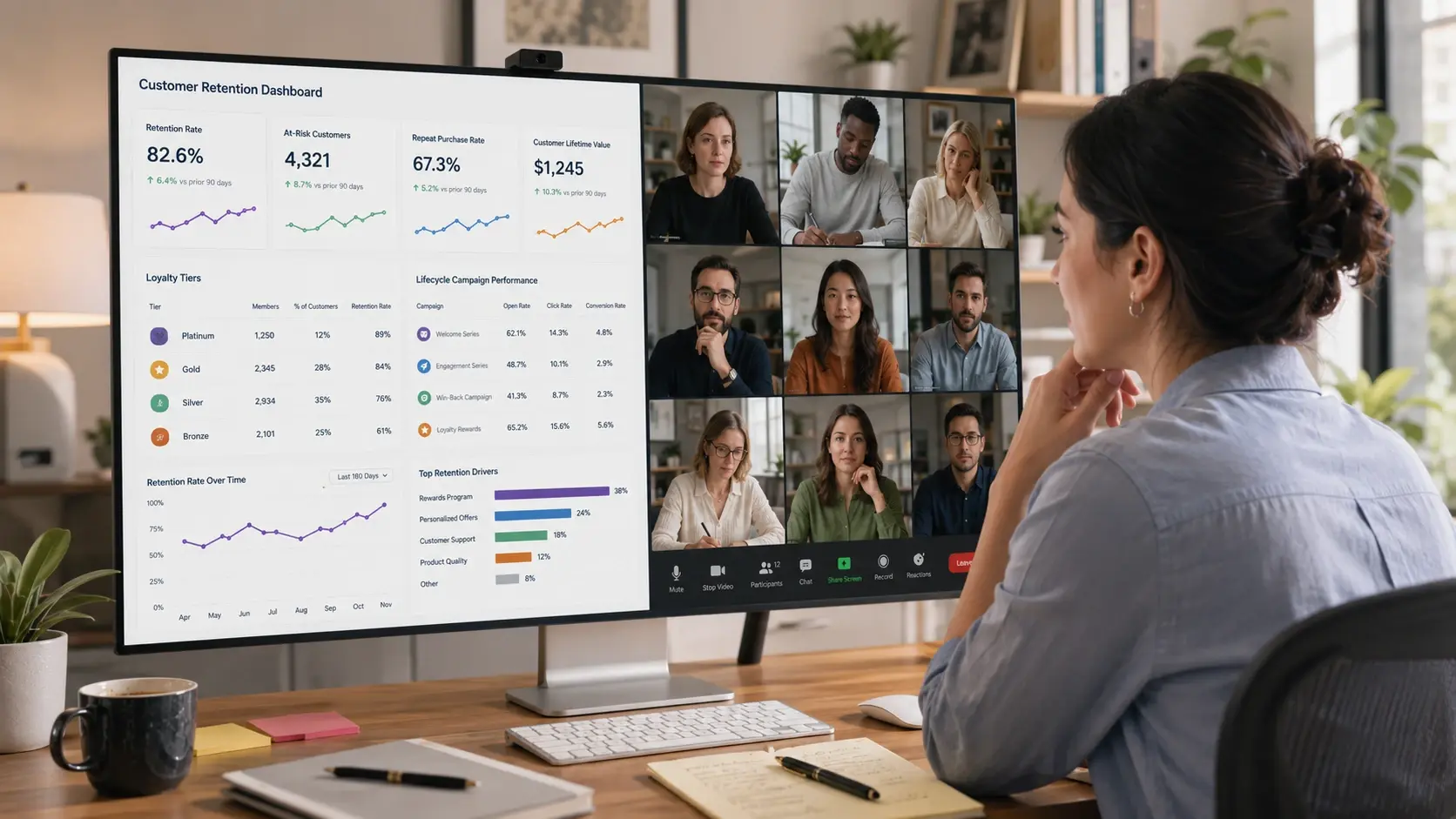
A customer retention program is a structured set of loyalty, lifecycle, and communication tactics designed to keep customers engaged and buying over time, rather than a single win-back email or seasonal promotion. The strongest programs connect a framework, a loyalty component, and lifecycle marketing into one system instead of running each piece separately.
TL;DR: Customer Retention Programs at a Glance
A retention program is not one campaign. It is the ongoing structure that decides what a brand sends, when, and to whom.
- A retention program needs a framework, not just a list of tactics, to stay consistent as a customer base grows
- Loyalty programs work best as one component inside a retention program, not a separate initiative running on its own
- Lifecycle marketing is what times retention messaging to where a customer actually is in their relationship with the brand
- Programs built this way outperform one-off campaigns because they compound instead of resetting
For more on what customer loyalty specifically contributes to a retention program, see Baesman's customer loyalty resources.
What Is a Customer Retention Program?
A customer retention program is the structure a brand uses to keep existing customers engaged, buying, and loyal over time.
It typically includes:
- A retention framework that defines stages, triggers, and messaging rules
- A loyalty component that rewards ongoing engagement and spend
- Lifecycle marketing campaigns tied to where a customer is in their journey
- Reporting that shows whether the program is actually working
A retention program is different from a retention strategy. A strategy defines the goal. A program is the actual structure, tactics, and cadence that carries that goal out. A brand can have a clear retention strategy on a slide deck and still have no working program if nothing translates that strategy into an actual framework, messaging cadence, and set of triggers that run day to day.
What Frameworks Do Strong Customer Retention Programs Use?
Strong retention programs are built around a framework, not a scattered list of tactics.
A lifecycle-stage framework organizes messaging around where a customer is in their relationship with a brand, new, active, at-risk, or lapsed, so each stage gets a different approach instead of the same generic offer.
A loyalty-tier framework structures rewards and recognition around customer value, so a top-tier member and a new member receive meaningfully different experiences.
A behavioral-trigger framework responds to specific actions a customer takes, a purchase, a reward redemption, a period of inactivity, rather than relying only on scheduled sends.
Most mature retention programs combine all three, using lifecycle stage to set the overall cadence, loyalty tier to shape rewards, and behavioral triggers to catch moments a fixed schedule would miss. A retailer might use lifecycle stage to decide that a customer six months into their relationship gets a different tone than someone on their first purchase, use loyalty tier to decide what that message actually offers, and use a behavioral trigger, like a cart abandonment or a reward about to expire, to decide exactly when it should send.

How Does Loyalty Integrate Into a Customer Retention Program?
Loyalty programs work best when they are built as a component of a retention program, not a separate initiative that happens to exist alongside it.
When loyalty sits inside the retention framework, a member's tier status, reward activity, and redemption behavior all feed the same data that drives lifecycle messaging elsewhere. A member close to a tier upgrade can get a nudge through email. A member who just redeemed a reward can get a relevant follow-up through direct mail instead of an unrelated generic offer.
When loyalty runs separately, brands end up managing two systems that occasionally disagree with each other, one that knows a customer just earned a reward, and one that is still sending them an acquisition-style message meant for someone new. That disconnect is often invisible to the marketing team and completely obvious to the customer receiving both messages in the same week.
For a closer look at what strong loyalty programs actually look like in practice, see Baesman's guide on customer loyalty insights.
How Does Lifecycle Marketing Fit Into a Retention Program?
Lifecycle marketing is what turns a retention framework into actual, timed communication.
Common lifecycle stages a retention program should account for include:
- New customer onboarding, setting expectations early
- Post-purchase follow-up, reinforcing the decision a customer just made
- Replenishment reminders, for products customers reorder on a predictable timeline
- Re-engagement, for customers whose activity has started to slow
- Win-back, for customers who have gone fully inactive
Each stage calls for a different message and often a different channel. A new customer might get a welcome email. A lapsed customer might need a more direct offer through direct mail to get their attention back. Baesman's guide on customer lifecycle management goes deeper into how brands turn first-time buyers into loyal customers using this same logic.
What Are Examples of Retention Program Tactics in Action?
Retention frameworks are easier to understand with real tactics attached to them.
A post-purchase example: a customer who just bought a product receives a follow-up message a week later with care tips or a complementary product recommendation, reinforcing the purchase rather than immediately pitching another sale.
A replenishment example: a customer who buys a consumable product on a predictable cycle receives a reminder timed to when they are likely running low, rather than a generic monthly promotion.
A loyalty tier example: a member who crosses a spend threshold gets a tier upgrade notification along with a benefit that reflects their new status, not just a congratulatory email with nothing attached to it.
A win-back example: a customer who has not purchased in several months receives a targeted offer through email, followed by a direct mail piece if the email goes unanswered, rather than one attempt and then silence.
None of these tactics work well in isolation. They work because they are part of a program that knows which stage each customer is in.
How Did Hibbett Rebuild Its Retention Program Around Customer Data?
Baesman's work with Hibbett shows what it looks like to rebuild a retention program around actual customer data rather than assumptions.
Hibbett had a large, established loyalty membership base, but the program was not growing customer value at the rate its size suggested. Baesman analyzed years of transactional data and found that the existing rewards structure was not translating into meaningful engagement or increased spend.
The retention program was redesigned around what the data actually showed about member behavior, rather than around the original program's assumptions, connecting that redesign to broader retail marketing execution rather than treating it as a loyalty-platform-only fix. Within two quarters of the relaunch, member purchase frequency increased 16%, and the program generated positive incremental revenue.
That result reflects the core idea behind a strong retention program: a large membership base is not the same as a working retention program. The framework behind it has to actually reflect how customers behave.
What Should Brands Track to Measure Retention Program Performance?
Brands should track whether their retention program is actually increasing customer value, not just whether members are enrolled or messages are being sent.
Useful metrics include:
- Customer retention rate: The percentage of customers who remain active over a set period
- Repeat purchase rate: How often customers return to buy again
- Customer lifetime value: The total revenue a customer generates over the relationship
- Loyalty tier progression: How many members are advancing rather than staying static
- Win-back rate: How often lapsed customers respond to a re-engagement effort
A program can show steady enrollment while purchase frequency and lifetime value stay flat, which is why enrollment alone is a weak signal of whether a retention program is actually working. A brand tracking only sign-ups and email opens can miss a program that is quietly losing its most valuable members, since neither metric shows whether those members are actually buying more or spending less over time. Baesman's customer engagement strategy and analytics services help brands build reporting that actually catches this, and for loyalty-specific metrics, see Baesman's guide on how to measure customer loyalty.
What Mistakes Do Brands Make When Building a Retention Program?
Retention programs tend to fail in a few predictable ways.
Some common mistakes include:
- Treating loyalty as a separate system instead of building it into the retention framework
- Sending the same message to every lifecycle stage instead of adjusting for where a customer actually is
- Relying on scheduled campaigns alone, with no behavioral triggers to catch real-time moments
- Measuring enrollment and open rates without tracking purchase frequency or lifetime value
- Letting the program run untouched for years without revisiting whether it still reflects customer behavior
Hibbett's own program is a useful example here. Before the redesign, it had scale but not performance, a reminder that a retention program built years ago on outdated assumptions can quietly underperform even while it keeps running. Brands unsure where their own program has gaps can start with a CRM Analytics Assessment to identify data quality and segmentation issues before they show up as flat retention numbers.

Frequently Asked Questions About Customer Retention Programs
What is a customer retention program?
A customer retention program is a structured combination of loyalty, lifecycle marketing, and behavioral triggers that a brand uses to keep existing customers engaged and buying over time.
What is the difference between a retention strategy and a retention program?
A strategy defines the goal a brand wants to achieve. A program is the actual framework, tactics, and cadence that carries that strategy out day to day.
How does loyalty fit into a customer retention program?
Loyalty works best as a component inside the retention framework, feeding the same customer data that drives lifecycle messaging, rather than running as a separate, disconnected system.
What are examples of retention program tactics?
Examples include post-purchase follow-ups, replenishment reminders, loyalty tier upgrade notifications, and win-back offers for lapsed customers.
How can brands measure whether a retention program is working?
Brands can track customer retention rate, repeat purchase rate, customer lifetime value, loyalty tier progression, and win-back rate.
What is the most common mistake brands make with retention programs?
The most common mistake is treating loyalty as a separate initiative instead of building it into the same framework that drives lifecycle marketing and behavioral triggers.
Final Takeaway: What Makes a Customer Retention Program Actually Work
A customer retention program is not defined by how many customers are enrolled. It is defined by whether its framework, loyalty component, and lifecycle marketing actually reflect how customers behave.
Brands that connect these three pieces see customer value compound over time, rather than resetting with every new campaign or promotion.
Download Baesman's Mastering Customer Loyalty Lifecycle ebook to see how retention frameworks, loyalty, and lifecycle marketing work together in practice.
About the Author