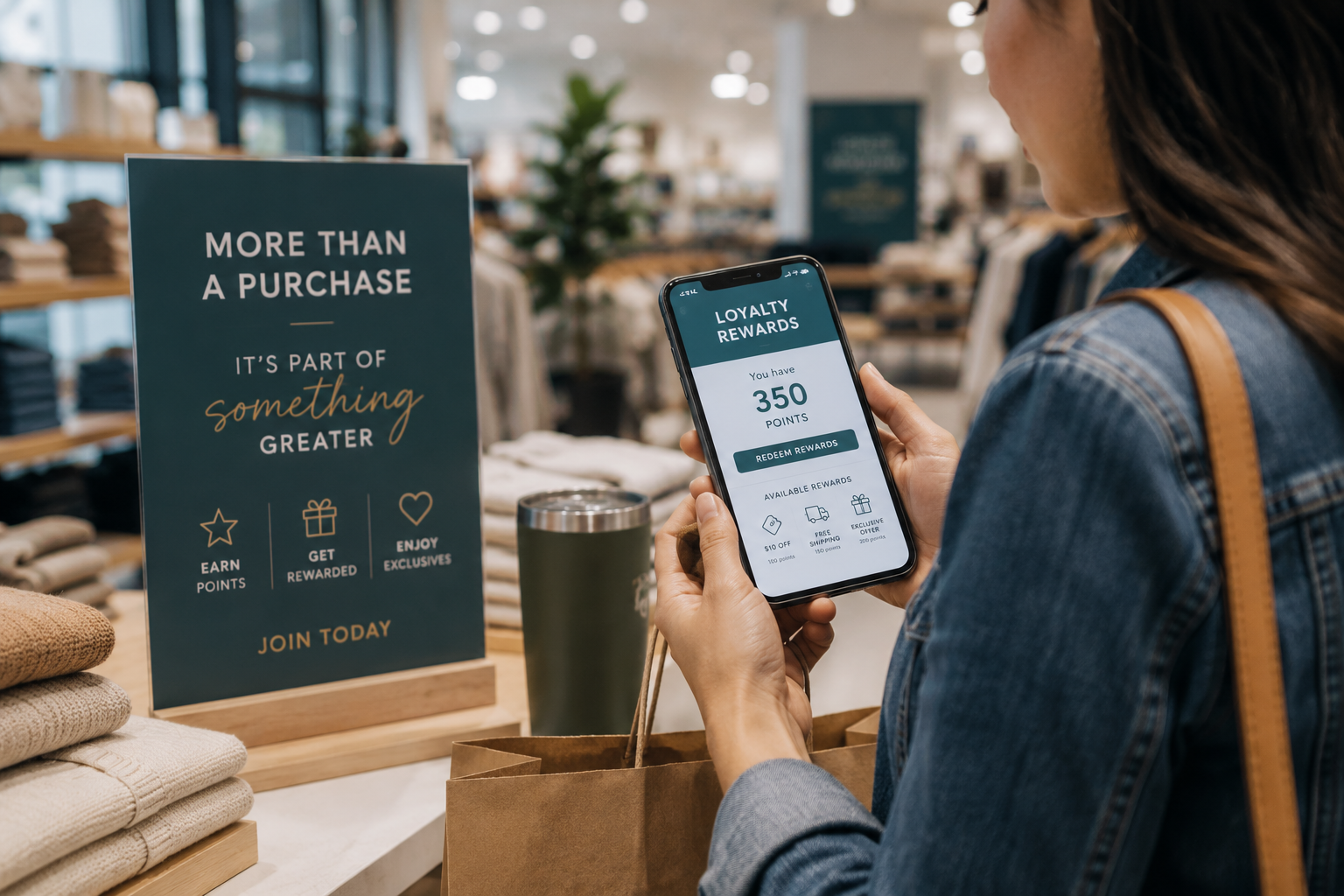
For years, loyalty programs were built around a familiar formula: join, earn points, get a discount, repeat.
That model is changing.
The customer loyalty trends emerging in 2026 show that brands are rethinking what loyalty should actually accomplish. Instead of treating loyalty as a standalone rewards program, companies are increasingly using it to influence customer behavior, increase engagement, strengthen retention, and create more meaningful brand relationships.
Baesman tracked 50 loyalty programs across 13 industries during Q1 and Q2 2026 to identify the changes taking place across the loyalty landscape. The findings point to a market that is becoming more sophisticated—and more focused on the overall customer experience.
One statistic stands out immediately: 62% of the programs tracked were updates to existing programs, compared with 28% that were entirely new programs. That suggests brands aren't necessarily starting over. They're recognizing that even established loyalty programs need to continuously evolve as customer expectations change.
So, what do these customer loyalty trends mean for brands in 2026?
1. Loyalty Programs Are Becoming Simpler and More Flexible
One of the clearest customer loyalty trends in 2026 is also one of the most straightforward: brands are making loyalty easier to understand.
Half of the programs evaluated are focused on making rewards easier to earn, understand, or redeem. That's a significant shift in an area where complicated rules, expiration dates, confusing point values, and difficult redemption processes have traditionally created friction.
Customers shouldn't have to do the math to figure out whether a loyalty program is worth participating in, which is why the most effective customer loyalty programs today are built around simplicity, relevance, and ease of use.
Brands are responding by simplifying earning structures and creating clearer paths to rewards. Examples identified in the report include:
- Air Canada simplifying elite status qualifications
- Hotels.com introducing a clearer "earn after every 10 nights" structure in the UK
- Kroger allowing points to be redeemed for grocery savings rather than only fuel
- Fresh Thyme introducing automatic enrollment, non-expiring points, and simple $5 reward increments
- British Airways simplifying partner airline earnings with fixed Tier Point rates
The lesson is simple: the value proposition needs to be immediately understandable.
Customers should know how they earn, what they receive, and how quickly they can use their rewards.
If those answers aren't obvious, complexity can become a barrier to engagement. For brands focused on customer loyalty, simplifying the experience can be just as important as increasing the value of the rewards themselves.
2. Tiered Loyalty Programs Are Expanding
Another major trend shaping customer loyalty in 2026 is the growth of tiered loyalty programs.
According to the report, 44% of the brands evaluated were expanding or introducing tiered structures.
Why?
Because tiers can turn loyalty from a passive membership into a progression.
Instead of simply asking customers to earn points, tiered programs give members something to work toward. Customers can see a path from entry-level participation to higher-value benefits, recognition, and status.
Recent examples include:
- Hilton Honors introducing an ultra-premium Diamond Reserve tier
- Michaels Rewards introducing Red, Gold, and Platinum tiers
- Advance Auto Parts launching 1st Gear, 2nd Gear, and Top Gear
- Bank of America introducing a four-tier rewards structure
- Starbucks revamping its program around Green, Gold, and Reserve tiers
But adding tiers isn't enough.
Effective tiered loyalty programs need clear thresholds and meaningful differences between levels. If the benefits aren't compelling—or if customers don't understand how to advance—the structure can add complexity without adding value.
The strongest programs make progression feel achievable and rewarding. This progression can be especially powerful for customer loyalty because it gives members a reason to remain engaged even after they've earned an initial reward.
3. Loyalty Is Moving Beyond Points and Discounts
The opportunity for brands is to determine what their customers actually value—and build those insights into a broader customer loyalty strategy that goes beyond discounts. Points and discounts aren't disappearing. But they're no longer the entire loyalty value proposition.
The report found that 42% of the brands evaluated now offer experiences, exclusive events, lifestyle perks, or similar benefits.
That represents a broader definition of customer loyalty and what customers can receive from being a member.
Instead of simply offering $5 off a purchase, brands are increasingly providing things such as:
- Exclusive experiences
- Event access
- Travel benefits
- Lifestyle perks
- Convenience
- Recognition
- Partner benefits
- Premium services
For example, American Airlines has expanded rewards to include experiences, gift cards, vacation credits, subscriptions, and inflight coupons. MGM Resorts has added benefits such as waived resort fees and free event access, while TELUS has expanded into wellness, pet care, travel, entertainment, and other lifestyle benefits.
This matters because emotional loyalty isn't always created by a discount.
A reward can be valuable because it saves money, but it can also be valuable because it makes a customer feel recognized, gives them access to something exclusive, or makes their experience more convenient.
The opportunity for brands is to determine what their customers actually value—and build those insights into a customer loyalty strategy that goes beyond discounts.
4. Partnerships Are Becoming a Loyalty Growth Lever
Loyalty programs don't have to operate in isolation.
The report found that 30% of the brands analyzed had expanded partnerships or cross-brand earning and redemption opportunities.
Partnerships can give members more ways to earn and redeem rewards while making a program more useful in everyday life.
Examples include:
- Marriott Bonvoy partnerships tied to airlines and major experiences
- Starbucks connections with Delta SkyMiles and Marriott Bonvoy
- Gap Inc. Encore experiential rewards involving Disney, NBCUniversal, and AMC Theatres
- Royal Caribbean Group connecting loyalty across Royal Caribbean, Celebrity Cruises, and Silversea
- Air Canada's partnership with the DINR restaurant app for earning and redeeming Aeroplan points around culinary experiences
When the right partnerships are in place, they can make a customer loyalty program more useful and relevant across more moments in the customer's everyday life.
For brands, the appeal is clear. A strategic partnership can expand the perceived value of a loyalty program without requiring the brand to fund every benefit itself.
The key is relevance.
The best partnerships aren't simply recognizable names added to a program. They solve a need, add convenience, or create an experience that makes membership more valuable.
5. Paid and Subscription Loyalty Is Gaining Momentum
Paid loyalty has been around for years, but the model continues to evolve.
The report found that 16% of the brands evaluated were incorporating subscription-style loyalty models, premium membership tiers, or paid benefits.
Examples include Lowe's HomeCare+, JetBlue's Points On Repeat, Best Buy's paid membership benefits, Six Flags' expanded subscription model, and Waymo Premier.
But paid loyalty comes with a higher bar.
Once customers are paying to participate, they need to understand exactly what they're getting in return.
The strongest paid programs provide recurring value through:
- Convenience
- Exclusive access
- Premium services
- Increased earning opportunities
- Additional benefits
- Time savings
Simply putting desirable benefits behind a paywall isn't enough. The value exchange has to feel obvious.
The Bigger Shift in Customer Loyalty
Taken together, these customer loyalty trends point to something bigger than individual program changes.
Customer loyalty itself is evolving.
The definition of customer loyalty is expanding from repeat purchases to include engagement, advocacy, participation, recognition, and the overall customer experience.
The report identifies five major shifts taking place across the loyalty landscape:
From Points → Value
Points still matter, but customers increasingly expect rewards to be tangible, flexible, and easy to use.
From Transactions → Relationships
Loyalty programs are rewarding more than purchases. Brands are recognizing engagement, frequency, app usage, progression, advocacy, and other behaviors.
From Generic Offers → Personalized Engagement
Loyalty data gives brands an opportunity to make offers and experiences more relevant to individual members.
From Standalone Programs → Ecosystems
Partnerships, co-branded cards, cross-brand earning, and expanded redemption options are making loyalty programs part of broader ecosystems.
From Enrollment → Active Participation
A large membership database doesn't necessarily mean a successful loyalty program.
Brands increasingly need to look at who is earning, redeeming, progressing, engaging, and responding.
That last shift may be the most important.
A customer who signed up three years ago but hasn't engaged since isn't necessarily demonstrating loyalty. A smaller group of active members who consistently interact with a brand may be far more valuable.
What Should Brands Do With These Customer Loyalty Trends?
The takeaway isn't that every brand needs to add tiers, launch a subscription, or create a dozen experiential rewards.
Instead, brands should look at their existing loyalty strategy and ask whether it is still delivering meaningful value to customers.
Consider these questions:
-
Is the program easy to understand?
-
Can a customer quickly explain how they earn and redeem rewards?
-
Is there a reason to engage beyond making a purchase?
-
Does the program encourage behaviors that strengthen the customer relationship?
-
Are the benefits meaningful?
-
Are rewards actually aligned with what customers value?
-
Does the program recognize customer differences?
-
Can high-value or highly engaged customers receive differentiated benefits?
-
Is personalization being used effectively?
-
Are loyalty data and customer behaviors informing more relevant experiences?
-
Does the program give customers a reason to come back?
Enrollment is only the beginning. The goal should be ongoing participation.
The Future of Customer Loyalty Is More Strategic
The first half of 2026 makes one thing clear: customer loyalty programs are no longer simply rewards programs.
They are becoming broader customer loyalty strategies designed to influence behavior, increase customer value, support retention, and strengthen relationships over time.
The brands that stand out won't necessarily be the ones with the biggest rewards catalog or the most complicated program structure.
They'll be the ones that make loyalty easy, relevant, valuable, and worth participating in.
As these customer loyalty trends continue to evolve, the question for brands isn't whether their customer loyalty strategy needs to change.
It's whether it's evolving fast enough.

Frequently Asked Questions
What are the biggest customer loyalty trends in 2026?
The biggest customer loyalty trends in 2026 include simpler program structures, expanding tiered loyalty, rewards beyond points and discounts, strategic partnerships, paid loyalty models, personalization, and a greater focus on active customer engagement.
How are loyalty programs changing in 2026?
Loyalty programs are shifting from transactional rewards toward broader customer engagement strategies. Brands are focusing more on retention, personalization, experiences, recognition, partnerships, and active participation rather than simply rewarding purchases.
Why are brands simplifying loyalty programs?
Brands are simplifying loyalty programs because complicated earning rules, unclear reward values, and difficult redemption processes can create customer friction. Simpler programs make it easier for customers to understand the value and participate.
Are tiered loyalty programs becoming more popular?
Yes. Baesman's Q1–Q2 2026 loyalty landscape analysis found that 44% of the brands evaluated were expanding or introducing tiered loyalty structures.
What are experiential loyalty rewards?
Experiential loyalty rewards provide value through experiences, exclusive access, events, lifestyle benefits, convenience, or recognition rather than relying solely on points and discounts.
Why are brands moving beyond points and discounts?
Points and discounts can encourage transactions, but brands are increasingly looking for ways to build deeper relationships and differentiate their loyalty programs. Experiences, recognition, convenience, and personalized benefits can create additional emotional and functional value.
What makes a successful customer loyalty program?
A successful customer loyalty program should provide clear value, simple mechanics, flexible redemption, relevant personalization, meaningful benefits, and reasons for customers to actively participate—not just enroll.


















.svg)