





-
Customer Strategy Services

Customer Analytics & Insights
Turn customer data into clear insights that improve targeting, campaign performance, and measurable growth.

Loyalty Program Design & Management
Build and manage loyalty programs that increase engagement, retention, and customer lifetime value.

CRM Channel Marketing & Management
Coordinate direct mail, email, and SMS strategies that reach the right customers and prove ROI.

Customer Lifecycle Marketing & Journey Mapping
Design connected journeys that move customers from acquisition to retention and repeat purchase.
Print & Marketing Execution

Direct Mail
Execute personalized direct mail campaigns that improve targeting, response rates, and measurable marketing ROI.

Email & SMS Marketing
Deliver timely, data-driven email and SMS campaigns that increase engagement, conversion, and customer retention.

In-Store Signage & All Things Print
Produce and deliver on-brand print, signage, and materials on time across every location.

Web-to-Print
Give teams one platform to order, customize, and control branded materials at scale.

Kitting & Fulfillment
Simplify complex distribution with accurate kitting, inventory control, and on-time delivery.
Branded Merchandise

Promotional Products & Branded Apparel
Curated, brand-right merchandise for campaigns, events, customer engagement, and everyday brand visibility.

Online Company Stores
Branded online stores that simplify ordering, inventory management and distribution across teams and locations.

Custom Kitting & Fulfillment
Custom kit assembly, warehousing, and reliable fulfillment for launches, events, employee programs, and customer campaigns.

Programs Built Around Your Goals
Brand-right merchandise solutions tailored to your audience, objectives, timeline and budget—from product selection through fulfillment.
-
-
-

Why Baesman?
We combine data-driven strategy, seamless execution, and personalized support to help brands build more profitable customer relationships.

Data Security & Trust Center
See how Baesman protects customer data with secure processes, compliance standards, and a commitment to transparency.

Awards
Explore the recognition that reflects Baesman’s commitment to innovation, quality, service, and results.

Partners
Discover the technology and strategic partnerships that help Baesman deliver smarter, more connected marketing.

Careers
Join a team that values collaboration, growth, and doing the right thing for clients, teammates, and each other.
5 min read
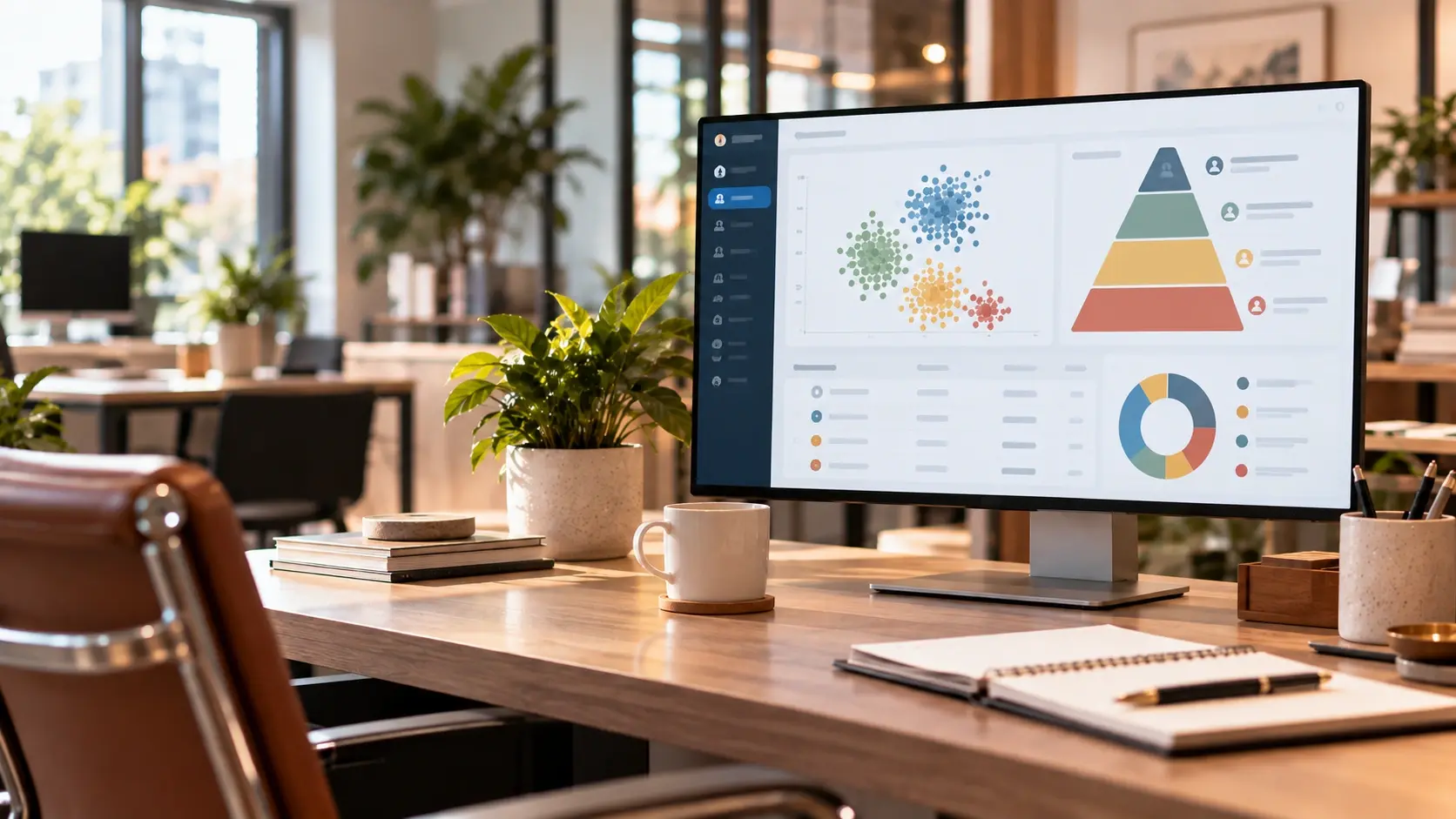
RFM analysis ranks customers by recency, frequency, and monetary value to identify who deserves the most attention. Most brands default to prioritizing their top-scoring Champions, but the segment with the best return in 2026 is actually "Can't Lose Them," high-value customers who have gone fully dormant. Winning even a small number of them back tends to outperform broad campaigns aimed at ordinary lapsed customers.
TL;DR: Which RFM Segment Delivers the Best Return in 2026?
The "Can't Lose Them" segment, high-value customers who have stopped buying, delivers the strongest ROI of any RFM group in 2026.
- Champions get the most attention, but they are already engaged and need the least convincing
- "Can't Lose Them" customers have high historical value and have gone fully dormant
- Win-back campaigns to this small, high-value group tend to outperform broad reactivation sends
- Static, quarterly RFM scoring misses customers as they move between segments
- Baesman's work with Rag & Bone shows what real reactivation of dormant, high-value customers looks like
Which RFM Segment Should You Prioritize in 2026?
The segment with the best return in 2026 is "Can't Lose Them," not Champions.
Champions already score well across recency, frequency, and monetary value, so they require the least effort to retain. "Can't Lose Them" customers have a different profile: high historical spend, but no recent activity. A tightly targeted win-back effort to a few dozen of these customers often outperforms a broadcast campaign sent to thousands of ordinary lapsed shoppers.
What Is RFM Analysis?
RFM analysis scores customers on three measurable behaviors, recency, frequency, and monetary value, then combines those scores into a single ranking.
Recency frequency monetary value together answer three questions: how recently a customer bought, how often they buy, and how much they have spent. RFM segmentation groups customers into ranked tiers based on those three inputs, which is what makes the model simple to put into practice. For a full breakdown, see Baesman's What Is RFM? A Simple Guide to Turning Recency, Frequency, and Monetary Value Into Loyalty Actions.
Why Do Most Brands Default to Prioritizing Champions?
Brands default to prioritizing Champions because they are the easiest segment to justify investing in. They are active, visible, and already generating revenue.
The problem is that Champions do not need much convincing to keep buying. Spending marketing effort on customers who were already going to purchase again produces a lower return than spending that same effort on a customer at real risk of being lost for good.
What Is the "Can't Lose Them" Segment in RFM Analysis?
The "Can't Lose Them" segment includes customers who once scored high on monetary value and frequency but now score poorly on recency. They were valuable, and they have gone quiet.
This group is easy to overlook because RFM scoring can make a dormant high-value customer look similar to any other lapsed customer at first glance. The difference is in the history: a "Can't Lose Them" customer has already proven, through past behavior, that they are worth winning back.
Why Does the "Can't Lose Them" Segment Deliver the Best ROI?
This segment delivers the best ROI because the economics of winning them back are asymmetric compared to other lapsed customers.
A customer who previously spent significantly is a different opportunity than one who never spent much to begin with. Campaigns using RFM-based targeting, rather than a one-size-fits-all approach, have shown ROI improvements of up to 77%, concentrated most heavily in segments like this one.
How Should Brands Approach Win-Back for This Segment?
Win-back campaigns for "Can't Lose Them" customers should feel personal, not like a generic discount blast.
An effective approach typically includes:
- Referencing what the customer previously bought or valued, not a generic offer
- Using a higher-touch channel, such as direct mail, for a smaller, high-value group
- Timing outreach based on how long the customer has been inactive
- Testing a meaningful incentive rather than a token discount
A successful win-back should also feed back into customer loyalty structure, since a reactivated "Can't Lose Them" customer often belongs in a different tier than before going dormant.

Why Is Static RFM Scoring No Longer Enough in 2026?
Static RFM scoring is no longer enough because customer behavior changes constantly, and a score calculated months ago no longer reflects reality.
A Champion today can become at-risk within weeks, and a "Can't Lose Them" customer can return unprompted. Quarterly scoring in a business with a weekly purchase cycle misses the window to act on either.
What Does Real-Time Segment Tracking Look Like in Practice?
Real-time segment tracking means recalculating RFM scores on a cadence that matches how often customers actually buy, not on a fixed quarterly schedule.
For most retail and loyalty programs, that means refreshing scores weekly or biweekly, so a customer moving from active to at-risk, or from dormant back to engaged, triggers a new action quickly. Baesman's customer engagement strategy and analytics services help brands build this kind of ongoing tracking instead of a static quarterly report.
How Did Rag & Bone Win Back Dormant High-Value Customers?
Baesman's work with Rag & Bone shows what real reactivation of dormant, high-value customers looks like when it is built on connected data, not a broad win-back blast.
Rag & Bone needed a better way to understand its customers and bring lapsed buyers back. Baesman built a unified customer profile using transactional analysis, giving the brand a clear view of which past customers were worth pursuing.
The results: a 15% lift in new customer revenue, a 50% increase in customer data capture, and 13% of sales attributed to reactivated lapsed buyers. That reactivation came from identifying which dormant customers had real prior value, not from a generic win-back email.
How Does RFM Customer Segmentation Fit Into Broader Segmentation Research?
RFM customer segmentation is one specific, practical model within the larger practice of customer segmentation research.
Broader segmentation research helps a brand decide which audiences are worth investing in. RFM gives that research a repeatable scoring method built entirely on purchase behavior a brand already has. For more on how segmentation models connect to first-party data, see Baesman's Customer Segmentation: Why First-Party Data Is What Makes Segments Actually Work.
What Data Points Matter Most for Personalized Direct Mail to This Segment?
The most valuable customer data points for personalized direct mail marketing to a "Can't Lose Them" segment are the specifics of what a customer previously bought, not just that they bought.
Purchase category, average order value, and past offers a customer responded to all give a win-back piece something concrete to reference, rather than a generic "we miss you" message.
How Does RFM Analysis Connect to the Rest of a Brand's Marketing?
RFM analysis works best when it drives action across every channel a brand uses, not just one.
An at-risk or dormant customer identified through RFM scoring should see that reflected in email and SMS messaging as well as direct mail. Retailers managing many locations extend the same thinking into retail marketing services, so segment-based action stays consistent everywhere a customer engages.
What Should Brands Track to Measure RFM Segment Performance?
Brands should track whether "Can't Lose Them" customers are actually returning, not just whether they have been identified.
Useful metrics include:
- Win-back rate specifically within the "Can't Lose Them" segment
- Revenue recovered from reactivated dormant customers relative to campaign cost
- Time between segment refresh and action taken on a moved customer
- Migration rate from "Can't Lose Them" back to active or Champion status
Frequently Asked Questions About RFM Analysis
What is RFM analysis?
RFM analysis ranks customers by recency, frequency, and monetary value to identify which customers deserve the most attention and what action each group needs.
Which RFM segment has the best ROI?
The "Can't Lose Them" segment, high-value customers who have gone dormant, typically delivers the best return, since winning back proven high spenders is more efficient than broad reactivation campaigns.
Why is the "Can't Lose Them" segment often overlooked?
Most brands focus attention on Champions because they are already active and easy to justify investing in, leaving dormant high-value customers under-targeted despite their proven worth.
Why does static RFM scoring fall short in 2026?
Customer behavior changes constantly, so RFM scores calculated on a quarterly basis can be months out of date, missing the window to act as customers move between segments.
How often should RFM scores be updated?
Most retail and loyalty programs benefit from refreshing RFM scores weekly or biweekly, matching how often customers typically purchase.
How does RFM customer segmentation relate to broader segmentation research?
RFM is one specific model within customer segmentation research, giving brands a repeatable scoring method based entirely on purchase behavior rather than demographics or assumptions.
Final Takeaway: Why "Can't Lose Them" Deserves the Budget Champions Usually Get
Champions feel like the safe place to invest marketing effort, but they need the least convincing. The "Can't Lose Them" segment, high-value customers who have gone quiet, is where the real return is waiting in 2026.
Brands that combine this kind of prioritization with real-time segment tracking see stronger reactivation results than brands running the same static RFM report every quarter, the same pattern behind Rag & Bone's 13% of sales coming from reactivated lapsed buyers.

To see how Baesman can help turn RFM analysis into targeted, real-time action, talk to Baesman.
About the Author