





-
Customer Strategy Services

Customer Analytics & Insights
Turn customer data into clear insights that improve targeting, campaign performance, and measurable growth.

Loyalty Program Design & Management
Build and manage loyalty programs that increase engagement, retention, and customer lifetime value.

CRM Channel Marketing & Management
Coordinate direct mail, email, and SMS strategies that reach the right customers and prove ROI.

Customer Lifecycle Marketing & Journey Mapping
Design connected journeys that move customers from acquisition to retention and repeat purchase.
Print & Marketing Execution

Direct Mail
Execute personalized direct mail campaigns that improve targeting, response rates, and measurable marketing ROI.

Email & SMS Marketing
Deliver timely, data-driven email and SMS campaigns that increase engagement, conversion, and customer retention.

In-Store Signage & All Things Print
Produce and deliver on-brand print, signage, and materials on time across every location.

Web-to-Print
Give teams one platform to order, customize, and control branded materials at scale.

Kitting & Fulfillment
Simplify complex distribution with accurate kitting, inventory control, and on-time delivery.
Branded Merchandise

Promotional Products & Branded Apparel
Curated, brand-right merchandise for campaigns, events, customer engagement, and everyday brand visibility.

Online Company Stores
Branded online stores that simplify ordering, inventory management and distribution across teams and locations.

Custom Kitting & Fulfillment
Custom kit assembly, warehousing, and reliable fulfillment for launches, events, employee programs, and customer campaigns.

Programs Built Around Your Goals
Brand-right merchandise solutions tailored to your audience, objectives, timeline and budget—from product selection through fulfillment.
-
-
-
Why Baesman?
We combine data-driven strategy, seamless execution, and personalized support to help brands build more profitable customer relationships.

Data Security & Trust Center
See how Baesman protects customer data with secure processes, compliance standards, and a commitment to transparency.

Awards
Explore the recognition that reflects Baesman’s commitment to innovation, quality, service, and results.

Partners
Discover the technology and strategic partnerships that help Baesman deliver smarter, more connected marketing.

Careers
Join a team that values collaboration, growth, and doing the right thing for clients, teammates, and each other.
5 min read
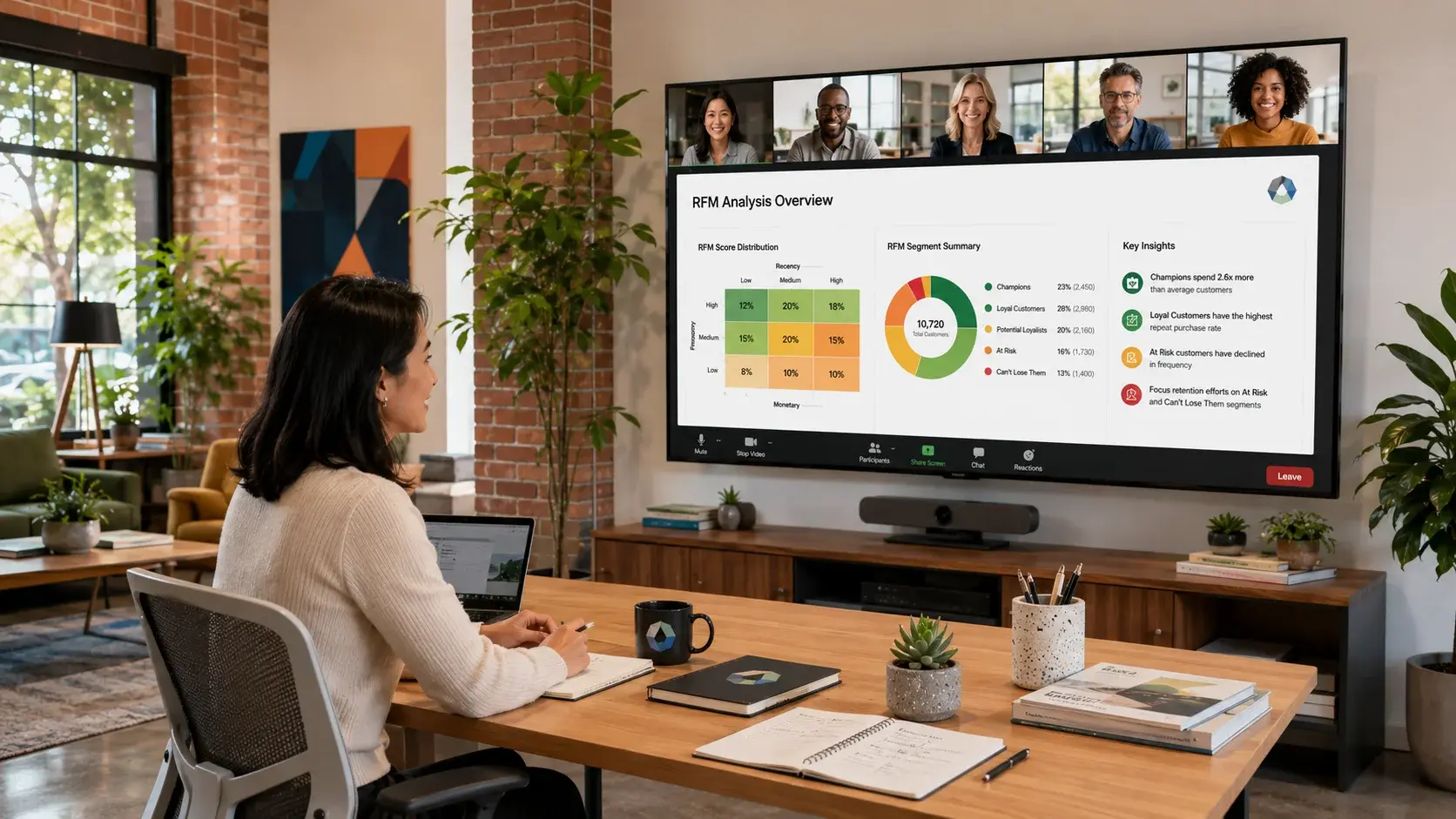
RFM stands for recency, frequency, and monetary value, a simple model that ranks customers by how recently they purchased, how often they buy, and how much they spend. Brands use it to identify which customers are actually worth the most, then match each group to a specific loyalty or personalization action instead of sending everyone the same message. The model itself is simple. What a brand does with the ranking is what makes it useful.
TL;DR: What Is RFM?
RFM ranks customers by value using recency, frequency, and monetary value, so brands know who to prioritize.
- Recency, frequency, and monetary value each measure a different part of customer behavior
- RFM analysis turns those three measures into a ranking, not just three separate numbers
- Different RFM groups, like top spenders or at-risk customers, need different actions, not one generic message
- Loyalty tier segmentation works best when it is built on RFM scores rather than spend alone
What Is RFM?
RFM is a way of scoring customers based on three measurable behaviors instead of demographics or assumptions:
- Recency: how recently a customer last purchased
- Frequency: how often a customer purchases over a given period
- Monetary value: how much a customer has spent in total or on average
RFM analysis combines these three scores into one ranking, so a brand can see at a glance which customers are the most engaged and valuable, and which have started to drift away. It is one of several models covered in Customer Segmentation: Why First-Party Data Is What Makes Segments Actually Work, and typically the most practical starting point since it relies entirely on purchase behavior a brand already has on file.
What Does Recency Mean in RFM?
Recency measures how much time has passed since a customer's last purchase. A customer who bought last week scores higher on recency than one who last bought eight months ago, even if their total spend is similar.
What Does Frequency Mean in RFM?
Frequency measures how often a customer buys within a set time period. A customer who purchases monthly scores higher on frequency than one who buys once a year, regardless of how much either spends per order.
What Does Monetary Value Mean in RFM?
Monetary value measures how much a customer has spent, either in total or per transaction. On its own, monetary value can be misleading. A customer who made one large purchase and never returned can look identical to a steady, frequent shopper if a brand only looks at total spend.
How Does RFM Analysis Rank Customers?
RFM analysis scores each customer on recency, frequency, and monetary value, then combines those three scores into a single ranking. Customers who score well across all three are typically a brand's most valuable, active customers.
This is where RFM customer segmentation becomes useful beyond a spreadsheet exercise. Instead of one long list ranked by spend, a brand ends up with distinct groups, like frequent high spenders, occasional big spenders, and customers who used to buy often but have gone quiet.

What Customer Groups Does RFM Segmentation Produce?
RFM segmentation typically produces a handful of recognizable customer groups, each with a different relationship to a brand.
Common groups include:
- Top customers, who score high on recency, frequency, and monetary value
- Big spenders, who buy rarely, high on monetary value but low on frequency
- Frequent, lower-spend shoppers, high on frequency but lower on monetary value
- At-risk or lapsed customers, who once scored well but have not purchased recently
- New customers, who do not yet have enough history to score reliably
For example, a specialty retailer might find that its highest lifetime spenders are not its most frequent shoppers. A customer who buys once a year during a major sale can have a higher total spend than a customer who shops every month, even though the frequent shopper is the more consistently engaged relationship. RFM analysis is what makes that distinction visible instead of hidden inside a single average.
How Should Loyalty Tier Segmentation Use RFM Scores?
Loyalty tier segmentation works better when it is built on RFM scores rather than lifetime spend alone. A tier structure based only on monetary value can end up rewarding a customer who spent big once, while overlooking a frequent shopper who is actually more loyal.
Baesman helps brands apply RFM analysis to loyalty program design so tiers reflect real engagement, not just historical spend. A tier structure built this way rewards recency and frequency alongside spend, which keeps the program focused on the customers most likely to stay active.
How Should Each RFM Group Be Personalized Differently?
Each RFM group should trigger a different action, not the same offer sent to the entire customer base.
A practical approach typically includes:
- Rewarding top customers with early access or recognition rather than a generic discount
- Encouraging big, infrequent spenders toward more regular purchases with well-timed reminders
- Reinforcing frequent, lower-spend shoppers with loyalty perks that reward consistency
- Sending targeted win-back offers to at-risk or lapsed customers before they fully disengage
- Encouraging new customers toward a second and third purchase, since early frequency often predicts long-term value
This same logic extends across channels. Direct mail and email and SMS messaging can both reflect RFM scoring, so an at-risk customer receives a win-back message instead of the same promotional email a top customer gets. Baesman's customer engagement strategy and analytics services help brands connect that scoring to execution across every channel, and retail marketing services extend that same RFM-based personalization into in-store and location-specific execution.
How Did Kate Spade Use Customer Data to Rank Value?
Baesman's work with Kate Spade shows what ranking customers by real value can do, even before those customers become existing loyalty members. Kate Spade needed a more effective way to acquire new customers and turned to Baesman for a data-driven approach.
Baesman built a multi-sourced testing strategy that analyzed spending behavior and customer data to identify the most valuable potential customer segments, rather than treating every new shopper the same. With that segmented approach in place, Kate Spade's customer acquisition performed 15% above plan, exceeding its goals for both revenue and brand growth.
That result did not come from spending more on acquisition. It came from ranking potential customers by the behaviors that actually predicted value, the same principle RFM applies to existing customers.
How Does RFM Connect to Broader Customer Segmentation Research?
RFM is one specific, practical model within the larger practice of customer segmentation research. Where Customer Segmentation Research: How Brands Discover Their Most Valuable Audiences covers how brands identify which audiences are worth investing in overall, RFM gives that research a concrete, repeatable scoring method built entirely on purchase behavior.
RFM also pairs directly with personalized execution. Once RFM analysis identifies which customers deserve a specific message, Variable Data Printing: The Secret Behind Personalized Direct Mail covers how that message actually gets personalized and produced at scale.
What Should Brands Track to Know If RFM Is Working?
Brands should track whether RFM-based actions actually change customer behavior, not just whether customers have been scored.
Key metrics include:
- Response rate by RFM group: whether top customers and at-risk customers respond differently to targeted messaging
- Migration between RFM groups: how often customers move from at-risk back to active, or from active toward lapsed
- Customer lifetime value by segment: whether top-ranked RFM groups actually generate more value over time
- Win-back rate: how many at-risk or lapsed customers respond to a targeted reactivation effort
- Loyalty tier performance: whether tiers built on RFM scores outperform a simple spend-based tier structure
For a broader view of how these dynamics are showing up in direct mail specifically, see the Direct Mail Trends Infographic.
Frequently Asked Questions About RFM
What does RFM stand for?
RFM stands for recency, frequency, and monetary value, three measures of customer behavior used to rank how valuable and engaged a customer is.
How is RFM different from general customer segmentation?
General customer segmentation can use many types of data, including demographics. RFM is a specific model built entirely on purchase behavior: how recently, how often, and how much a customer buys.
What is the most important part of RFM?
No single component matters most on its own. A customer who scores well on monetary value but poorly on recency and frequency is a different opportunity than one who scores well across all three.
How does RFM support loyalty program design?
RFM gives loyalty tier segmentation a more accurate foundation than spend alone, so tiers reward consistent engagement and recency, not just historical purchase size.
Can RFM analysis help win back lapsed customers?
Yes. RFM identifies customers who once scored well but have gone quiet, allowing brands to send a targeted win-back offer before that relationship is fully lost.
Does RFM work for new customers with limited purchase history?
Not immediately. New customers often need a separate approach, such as encouraging a second and third purchase, until they have enough history for RFM scoring to be reliable.
Final Takeaway: Why RFM Works Best When It Drives Action
RFM is a simple way to answer a hard question: which customers actually deserve the most attention, and what should a brand do differently for each group. Recency, frequency, and monetary value each reveal a different part of the answer, and combining them turns a long customer list into groups a brand can actually act on.
Brands that connect RFM analysis to loyalty tiers, personalization, and channel execution get more value from every customer relationship than brands that only use it to build a report, the same principle behind Kate Spade's 15% above-plan acquisition performance.
To see how Baesman helps brands turn customer data into ranked, actionable segments, talk to Baesman.

About the Author