
-
Customer Strategy Services

Customer Analytics & Insights
Turn customer data into clear insights that improve targeting, campaign performance, and measurable growth.

Loyalty Program Design & Management
Build and manage loyalty programs that increase engagement, retention, and customer lifetime value.

CRM Channel Marketing & Management
Coordinate direct mail, email, and SMS strategies that reach the right customers and prove ROI.

Customer Lifecycle Marketing & Journey Mapping
Design connected journeys that move customers from acquisition to retention and repeat purchase.
Print & Marketing Execution

Direct Mail
Execute personalized direct mail campaigns that improve targeting, response rates, and measurable marketing ROI.

Email & SMS Marketing
Deliver timely, data-driven email and SMS campaigns that increase engagement, conversion, and customer retention.

In-Store Signage & All Things Print
Produce and deliver on-brand print, signage, and materials on time across every location.

Web-to-Print
Give teams one platform to order, customize, and control branded materials at scale.

Kitting & Fulfillment
Simplify complex distribution with accurate kitting, inventory control, and on-time delivery.
Branded Merchandise

Promotional Products & Branded Apparel
Curated, brand-right merchandise for campaigns, events, customer engagement, and everyday brand visibility.

Online Company Stores
Branded online stores that simplify ordering, inventory management and distribution across teams and locations.

Custom Kitting & Fulfillment
Custom kit assembly, warehousing, and reliable fulfillment for launches, events, employee programs, and customer campaigns.

Programs Built Around Your Goals
Brand-right merchandise solutions tailored to your audience, objectives, timeline and budget—from product selection through fulfillment.
-
-
-
.svg)
Why Baesman?
We combine data-driven strategy, seamless execution, and personalized support to help brands build more profitable customer relationships.

Data Security & Trust Center
See how Baesman protects customer data with secure processes, compliance standards, and a commitment to transparency.

Awards
Explore the recognition that reflects Baesman’s commitment to innovation, quality, service, and results.

Partners
Discover the technology and strategic partnerships that help Baesman deliver smarter, more connected marketing.

Careers
Join a team that values collaboration, growth, and doing the right thing for clients, teammates, and each other.




4 min read
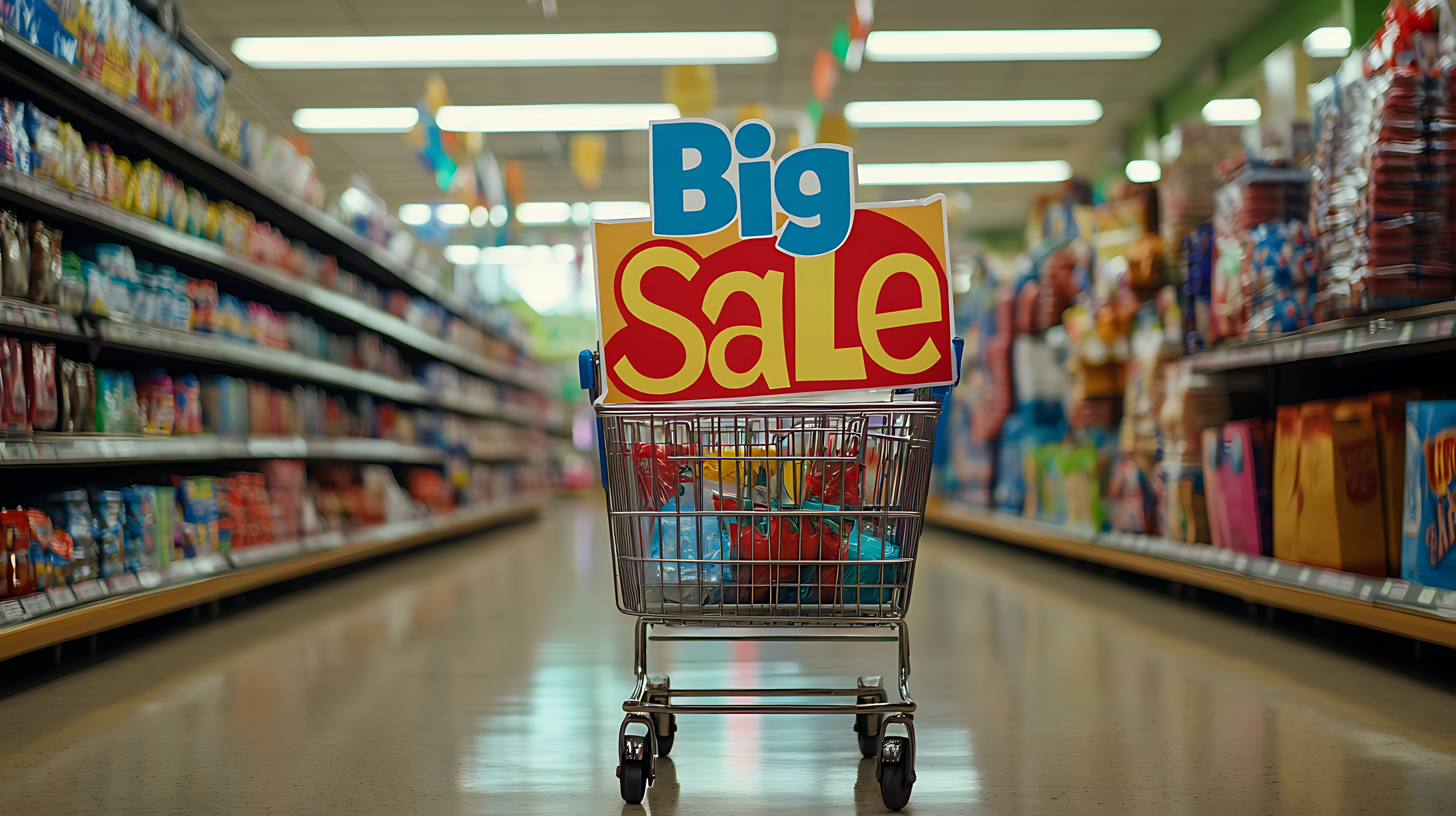
The overlooked constraint in retail performance isn’t traffic, it’s in-store execution
The assumption that physical retail is losing influence is outdated. What’s actually happening is a shift in where decisions get made. Even in an omnichannel journey shaped by email, SMS, and digital ads, the final moment of truth often still happens inside the store.
When executed strategically, point of purchase displays and in-store signage do more than attract attention. They shape behavior, guide navigation, and convert intent into revenue at the exact moment it matters most.
In-Store Signage Is a Performance Channel, Not a Creative Afterthought
Most brands still treat in-store signage as a static extension of brand guidelines, something to “support” campaigns already running elsewhere.
That mindset leaves revenue on the table. High-performing retailers treat point of purchase displays as a dynamic, data-informed channel that:
- Reinforces messaging from email and SMS
- Closes the gap between browsing and buying
- Increases basket size through contextual prompts
- Moves customers through the store with intention
In other words, pop signage is the last mile of your marketing strategy, and often the most measurable.
Where POP Signage Actually Drives Sales
1. Converting Intent at the Shelf
Customers rarely walk into a store as blank slates. They arrive with partial intent, shaped by prior brand interactions.
Strategic pop signage:
- Reinforces known offers (“20% off today only” seen in email)
- Reduces friction in decision-making
- Provides confidence at the moment of comparison
This is especially critical in high-choice environments where hesitation leads to abandonment, not just of a product, but of the purchase altogether.
2. Increasing Basket Size Through Context
The most effective point-of-purchase displays don’t just sell a product; they suggest a next action.
Examples include:
- Cross-merchandising signage (“Pair this with…”)
- Bundled value messaging
- Limited-time incentives tied to adjacent products
When aligned with shopper behavior, in-store signage becomes a subtle but powerful driver of incremental revenue.
3. Bridging Digital and Physical Experiences
Modern retail isn’t channel-based, it’s continuous.
Customers move fluidly from:
- Email → store visit
- SMS offer → in-aisle decision
- Loyalty reward → in-store redemption
Pop signage plays a critical role in connecting these moments:
- Reinforcing personalized offers at the shelf
- Using QR codes or short links to extend engagement
- Making digital campaigns feel tangible and immediate
Without this bridge, omnichannel strategies break down at the most important step: conversion.
4. Guiding Movement and Reducing Friction
Store layout matters, but signage determines how customers experience that layout.
Well-executed in-store signage:
- Directs traffic to high-margin or overstocked items
- Reduces confusion in large or complex environments
- Shortens the path to purchase
This is operationally critical. The longer a customer feels uncertain, the less likely they are to complete a purchase.
What Most Brands Get Wrong
Despite its potential, pop signage is often underutilized due to three common gaps:
1. Lack of Integration
Signage is developed in isolation from email and promotional planning.
2. Static Execution
Creative remains unchanged for weeks or months, despite shifts in inventory, pricing, or campaigns.
3. No Performance Feedback Loop
Unlike digital channels, signage is rarely measured or optimized with the same rigor.
What High-Performing Brands Do Differently
Brands that see measurable lift from point-of-purchase displays treat signage as part of a broader performance ecosystem:
- Campaign alignment: Messaging mirrors what customers saw before entering the store
- Versioning at scale: Different locations, audiences, or inventory conditions trigger different signage
- Speed to market: Updates happen quickly, without operational bottlenecks
- Measurement mindset: Sales lift, basket size, and product movement inform future iterations
This is where operational infrastructure, like centralized marketing execution and print-on-demand, becomes a competitive advantage.
The Role of POP Signage in a Strategy
For brands expanding into retail or retailers evolving their store experience, in-store signage is not just about branding.
It’s about:
- Timing: Delivering the right message at the right moment
- Relevance: Reflecting customer behavior and context
- Consistency: Extending omnichannel experiences into the physical space
- Revenue impact: Driving measurable sales outcomes
When pop signage is treated as a strategic lever rather than a static asset, it becomes one of the most controllable and under-leveraged drivers of in-store performance.
Connecting Campaigns to Conversion at the Shelf
Turning POP signage, point-of-purchase displays, and in-store signage into measurable revenue impact requires more than creative execution. It requires alignment between strategy, data, and production so campaigns can move seamlessly from planning to the store floor. Baesman helps brands close that gap by connecting marketing intent to in-store execution through scalable production, centralized management, and data-informed personalization. The result is signage that keeps pace with campaigns, stays consistent across locations, and is built to drive performance rather than simply fill space.

FAQ: POP Signage and In-Store Sales Performance
1. What is POP signage and how is it different from general in store signage?
POP signage (point of purchase signage) is a subset of in store signage specifically designed to influence decisions at or near the moment of purchase. While general in-store signage may focus on navigation or brand storytelling, POP signage is performance-driven—it exists to convert intent into action at the shelf, display, or checkout.
2. How do point of purchase displays influence in-store sales?
Point of purchase displays influence behavior by reducing friction in decision-making. They reinforce pricing, clarify value, highlight promotions, and guide product selection. When aligned with broader marketing campaigns, they help maintain continuity from pre-store messaging to the final purchase decision.
3. What makes pop signage effective versus ineffective?
Effective pop signage is:
- Timely (aligned with active campaigns and promotions)
- Clear (removes ambiguity at the shelf)
- Contextual (reflects shopper intent and store conditions)
- Action-oriented (drives a specific behavior, not just awareness)
Ineffective signage is typically static, disconnected from marketing strategy, and not updated frequently enough to reflect real-time business needs.
4. Can in store signage be tied to measurable ROI?
Yes—but only when it is integrated into a broader measurement framework. High-performing teams connect in store signage to:
- Sales lift by location or SKU
- Basket size and attach rate changes
- Promotion performance windows
- A/B testing across stores or formats
Without this structure, signage is treated as a cost center rather than a performance driver.
5. How does POP signage connect to omnichannel marketing?
POP signage acts as the in-store extension of omnichannel campaigns. It reinforces messages from email, SMS, and digital ads at the moment of purchase. This continuity reduces drop-off between intent and conversion and ensures customers experience a consistent narrative across channels.
6. What are the biggest challenges in scaling point of purchase displays?
The most common challenges include:
- Long production and deployment timelines
- Lack of versioning across store locations
- Disconnection between marketing and in-store execution teams
- Limited visibility into performance impact
These issues often prevent point of purchase displays from adapting quickly to campaign or inventory changes.
7. How should brands think about POP signage differently?
Brands should stop thinking of pop signage as static print collateral and instead treat it as in-store conversion infrastructure. That means:
- Planning signage alongside campaign strategy
- Building systems for rapid updates
- Measuring performance like any other marketing channel
- Ensuring alignment between digital intent and physical execution
8. What role does POP signage play in customer loyalty and repeat purchases?
When in store signage reflects personalized offers, loyalty rewards, or consistent brand messaging, it reinforces familiarity and trust. This continuity strengthens post-purchase satisfaction and increases the likelihood of repeat engagement, especially when tied back to CRM-driven campaigns.