






-
Customer Strategy Services

Customer Analytics & Insights
Turn customer data into clear insights that improve targeting, campaign performance, and measurable growth.

Loyalty Program Design & Management
Build and manage loyalty programs that increase engagement, retention, and customer lifetime value.

CRM Channel Marketing & Management
Coordinate direct mail, email, and SMS strategies that reach the right customers and prove ROI.

Customer Lifecycle Marketing & Journey Mapping
Design connected journeys that move customers from acquisition to retention and repeat purchase.
Print & Marketing Execution

Direct Mail
Execute personalized direct mail campaigns that improve targeting, response rates, and measurable marketing ROI.

Email & SMS Marketing
Deliver timely, data-driven email and SMS campaigns that increase engagement, conversion, and customer retention.

In-Store Signage & All Things Print
Produce and deliver on-brand print, signage, and materials on time across every location.

Web-to-Print
Give teams one platform to order, customize, and control branded materials at scale.

Kitting & Fulfillment
Simplify complex distribution with accurate kitting, inventory control, and on-time delivery.
Branded Merchandise

Promotional Products & Branded Apparel
Curated, brand-right merchandise for campaigns, events, customer engagement, and everyday brand visibility.

Online Company Stores
Branded online stores that simplify ordering, inventory management and distribution across teams and locations.

Custom Kitting & Fulfillment
Custom kit assembly, warehousing, and reliable fulfillment for launches, events, employee programs, and customer campaigns.

Programs Built Around Your Goals
Brand-right merchandise solutions tailored to your audience, objectives, timeline and budget—from product selection through fulfillment.
-
-
-

Why Baesman?
We combine data-driven strategy, seamless execution, and personalized support to help brands build more profitable customer relationships.

Data Security & Trust Center
See how Baesman protects customer data with secure processes, compliance standards, and a commitment to transparency.

Awards
Explore the recognition that reflects Baesman’s commitment to innovation, quality, service, and results.

Partners
Discover the technology and strategic partnerships that help Baesman deliver smarter, more connected marketing.

Careers
Join a team that values collaboration, growth, and doing the right thing for clients, teammates, and each other.
3 min read
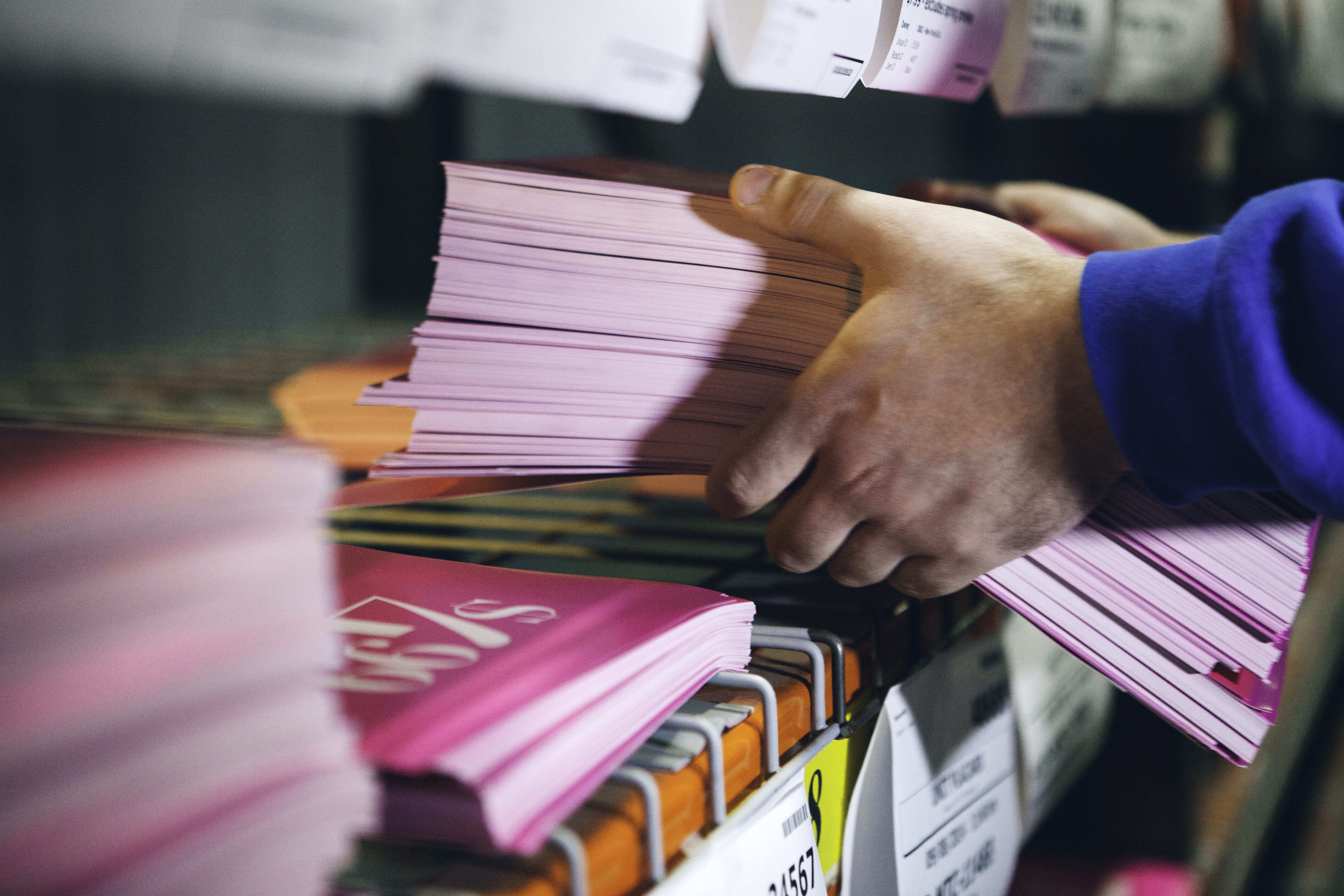
Although digital marketing channels have taken on increasing importance for many companies, direct mail can still play an important role in your marketing strategy. Direct mail has long been—and continues to be—a successful way of delivering the right message to the right audience at the right time.
Direct mail campaigns have great potential if done well. For one, direct mail boasts an open rate of up to 90 percent compared to 20-30 percent for email, along with a 75 percent brand recall rate. It can be a cost-effective way to reach your consumers and get them excited about your company. But in order to get it right, you need an optimal direct mail marketing strategy and partner to help bring it to life.
To maximize your ROI with direct mail, be sure to follow these strategic best practices.
1. Make It Personal (in a Good Way)
Increasingly, we’re seeing that personalization is key to engaging consumers in today’s marketplace. Research shows that even simple personalization, such as adding someone’s name to a direct mail piece, can increase response rates by 135 percent. On the other hand, mailers that look and feel generic are likely to fall flat.
Effective personalization goes beyond simply knowing customers by name. It also means leveraging data on demographics and purchasing behavior to customize promotional offers, market unique content, and even modify pricing to connect more effectively with each of your customers. Using personalization can increase sales by 56 percent.

How can you meet customers’ expectations for personalized content? Here are two effective strategies to employ:
Get granular with your audience.
Use market segmentation to gain detailed insights into the specific groups of customers you need to reach. Demographic data, along with other forms of market research such as surveys and focus groups, can help you understand how best to tailor content to appeal to these groups as part of your direct mail marketing strategy.
Get dynamic with your messaging.
Once you understand your customers, you can use adaptive templates to tailor your messaging to each type of customer. These templates include placeholders for different components of your design, including images, your logo, promotional offers, and other text. You can insert the right components on different mailers based on customer data, allowing you to focus on precise messaging while saving on time and costs.
2. Make an Impression Without Breaking the Bank
Lowering your costs can automatically raise your ROI on direct mail campaigns—but only if you don’t sacrifice on quality.
Wasted spending? Cut it out!
One effective direct mail marketing strategy is to eliminate as much waste as possible. For example, many marketers don’t even realize they’re overpaying for postcard postage. A few extra cents per postcard can add up to thousands of wasted dollars in your marketing budget. A knowledgeable and strategic direct mail partner can also help you determine how best to optimize your materials. For example, you may not need to use letter-sized paper when you could achieve the same effect on a 6x9” self-mailer.
Go fishing for new revenue streams.
You can also look for ways to increase your revenue. For example, why not consider collaborating with complementary brands? This move can also add value for your customers. A direct mail campaign for a home decor store could include an ad and promotional offer for a paint store. This may be the perfect way to encourage recipients to spruce up their interior with a fresh coat of paint and some new decor.
3. Breathe Fresh Air into Old Trends
Direct mail may be a mainstay in the marketing world, but that doesn’t mean it remains the same. Creating direct mail according to old trends can result in campaigns that feel predictable and stale to consumers.
Instead, marketers must stay on top of ever-evolving trends to ensure they’re making the most of their direct mail marketing strategy. Some examples of current trends shaping direct mail campaigns include:
- Increased use of postcards
- Concise messaging
- Digital calls to action and QR codes
- Eco-friendly messaging and materials
- Handwritten-style notes
- Industry-specific content and procedures
- Portable offer cards
4. Don’t Go It Alone—Partner Up!
Even the most flexible technology doesn’t automatically ease the process of implementing a direct mail marketing strategy—but the right partner can. To make the most of your direct mail marketing, you need an experienced partner who can guide you to success. To enjoy a productive partnership, you should do the following:
Chart your course.
KnowKnow and communicate your goals clearly upfront. Is your aim to drive more foot traffic to your business, raise brand awareness, or increase sales? Be specific to get on the same page as your direct mail partner and know how to measure your direct mail marketing strategy’s success.
Expand your horizons.
Aspire to reach a new demographic or market. Learn whether potential partners can help you scale and achieve those goals.
Ask the right questions.
For example, you may want to ask a prospective partner:
- How collaborative is your partnership approach?
- Do you help with strategy, printing, and logistics?
- Will you help me find the best postage and paper rates?
- Can my data be used to personalize content?
- Will there be any tracking or reporting on ROI?
Partner with Baesman for Your Direct Mail Strategy and Fulfillment Needs
Need a direct mail partner you can count on? Baesman does it all, from strategy and data analytics, to printing, postage, mailing, and tracking.
Learn more about how we can help with implementing an effective direct mail strategy through our eBook The Customer Experience Just Got More Personal.

About the Author