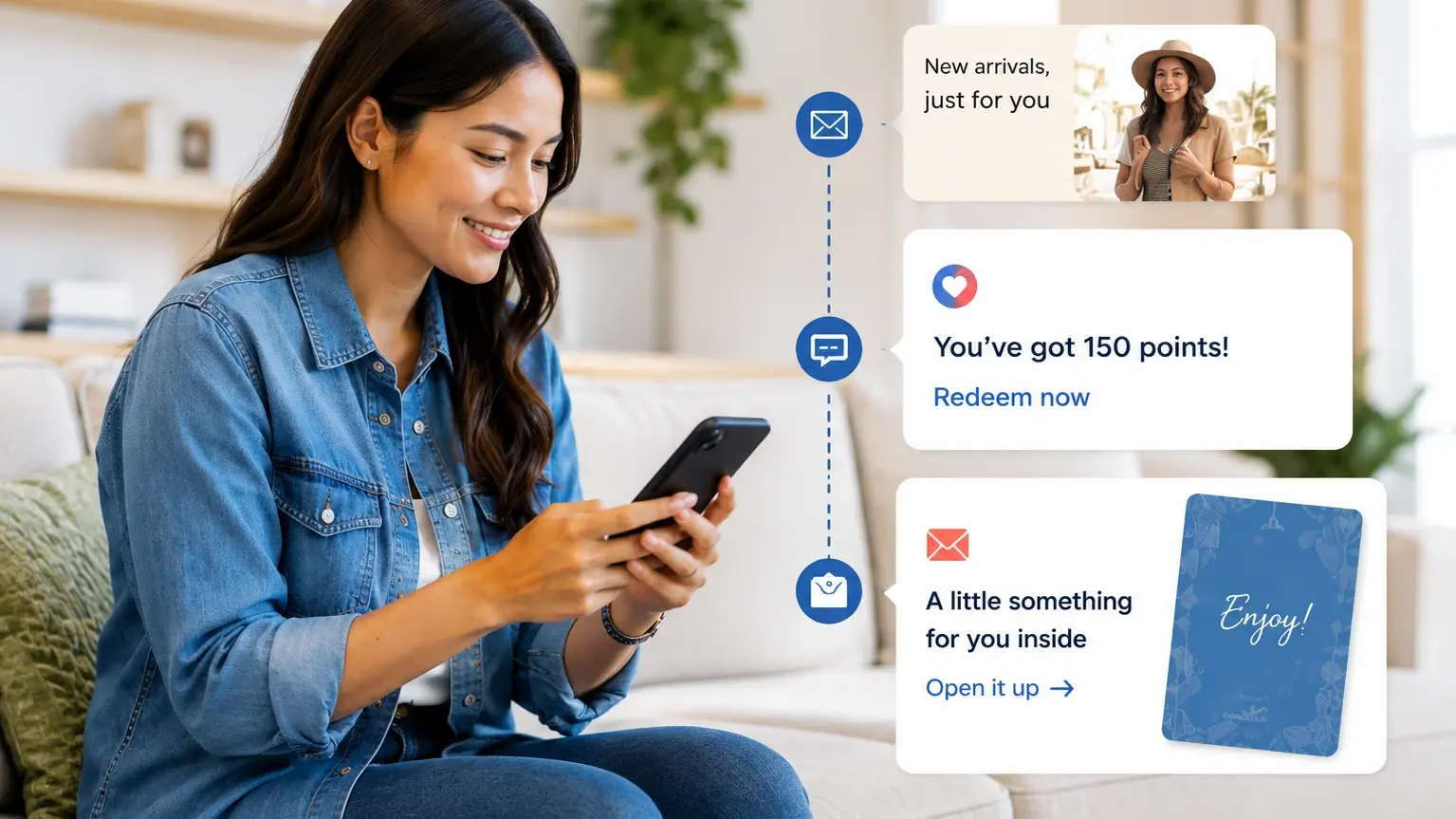
A loyalty marketing strategy helps brands increase customer retention, improve personalization, and drive long-term revenue growth through ongoing customer engagement. Modern loyalty program strategies combine customer data, personalized experiences, omnichannel marketing, and loyalty analytics to strengthen customer relationships and increase customer lifetime value.
For retail and customer-focused brands, loyalty is no longer just a rewards program. It is a core business growth strategy.
TL;DR
- Loyalty marketing strategies focus on long-term customer retention and engagement
- Modern loyalty programs use personalization and customer data to improve relevance
- Omnichannel loyalty marketing creates connected customer experiences
- Loyalty analytics help brands measure retention and revenue impact
- Personalized loyalty marketing improves customer engagement and repeat purchases
- Strong loyalty programs contribute directly to customer lifetime value growth
What Is a Loyalty Marketing Strategy?
A loyalty marketing strategy is a structured approach brands use to encourage repeat purchases, increase customer engagement, and strengthen long-term customer relationships.
Traditionally, loyalty programs focused mainly on:
- Points systems
- Discounts
- Coupons
- Transaction-based rewards
Today, loyalty marketing strategies are much broader.
Modern customer loyalty strategies often include:
- Personalized offers
- Omnichannel engagement
- Loyalty segmentation
- Mobile messaging
- Customer data integration
- Lifecycle marketing
- Behavioral targeting
The goal is not simply rewarding transactions. It is creating more relevant and connected customer experiences over time.
Learn more about Baesman’s customer loyalty services.
Why Are Loyalty Programs More Important Than Ever?
Customer acquisition costs continue to rise across retail and consumer marketing.
As a result, many brands are shifting focus toward:
- Customer retention
- Repeat purchases
- Customer lifetime value
- Long-term engagement
A strong loyalty program strategy helps brands maintain customer relationships while creating more opportunities for ongoing engagement.
Loyalty programs also provide valuable customer insights, including:
- Purchase behavior
- Shopping frequency
- Product preferences
- Channel engagement
- Promotional responsiveness
This data supports more personalized loyalty marketing and stronger customer retention strategies.
The brands seeing the strongest results are using loyalty as a connected engagement ecosystem, not just a discount program.
What Makes Customers Stay Loyal to a Brand?
Customer loyalty is influenced by more than discounts or reward points.
Customers are more likely to stay engaged when brands provide:
- Personalized experiences
- Relevant communication
- Consistent customer service
- Convenient shopping experiences
- Meaningful rewards
- Recognition across channels
Strong loyalty marketing strategies focus on emotional engagement and long-term customer relationships, not just transactional incentives.
Brands that understand customer preferences and behaviors are better positioned to improve loyalty member engagement over time.
How Does Personalization Improve Loyalty Marketing?
Personalization is one of the most important components of modern loyalty marketing.
Customers increasingly expect:
- Relevant offers
- Personalized recommendations
- Individualized communication
- Channel-specific experiences
- Recognition based on behavior and preferences
Loyalty program personalization helps brands deliver these experiences at scale.
For example:
- A retail customer may receive product recommendations based on recent purchases
- A loyalty member may receive targeted offers tied to shopping behavior
- High-value customers may receive exclusive experiences or early access promotions
This type of data-driven loyalty marketing creates stronger loyalty customer engagement while improving retention and repeat purchase behavior.
Explore Baesman’s customer engagement strategy and analytics services.
What Should a Loyalty Marketing Strategy Include?
Successful loyalty programs balance customer value with measurable business outcomes.
Strong loyalty marketing campaigns typically include:
- Clear customer benefits
- Personalized engagement
- Omnichannel experiences
- Relevant rewards
- Behavioral segmentation
- Consistent communication
- Performance measurement
The strongest programs also align loyalty strategy with broader customer experience goals.
This includes:
- Email marketing
- Mobile messaging
- Direct mail
- Ecommerce
- Retail experiences
- Customer service interactions
When these channels work together, loyalty becomes more integrated into the overall customer journey.
How Does Omnichannel Loyalty Marketing Work?
Omnichannel loyalty marketing connects customer engagement across digital and physical channels.
Customers may interact with a brand through:
- Retail stores
- Ecommerce platforms
- Email campaigns
- Mobile apps
- SMS messaging
- Direct mail
- Loyalty portals
The challenge is maintaining consistency across all those touchpoints.
A connected loyalty strategy helps unify:
- Messaging
- Offers
- Rewards
- Customer data
- Engagement tracking
For example:
- A customer receives a personalized email offer
- Direct mail reinforces the promotion
- Mobile messaging creates urgency
- Loyalty rewards encourage repeat purchases
- In-store experiences align with digital engagement
This creates a more seamless customer experience while improving loyalty member engagement.
Learn more about Baesman’s email and mobile messaging services.
Why Do Loyalty Analytics Matter?
Customer loyalty analytics help brands measure how loyalty programs impact business performance.
Important loyalty metrics often include:
- Repeat purchase rate
- Customer retention
- Redemption rates
- Purchase frequency
- Average order value
- Loyalty participation
- Customer lifetime value
- Engagement trends
Without analytics, brands may struggle to understand:
- Which offers perform best
- Which customers are at risk of churn
- Which loyalty campaigns improve retention
- Which channels drive engagement
Data-driven loyalty marketing helps organizations make smarter decisions based on actual customer behavior.
This creates stronger loyalty marketing ROI over time.
How Can Direct Mail Support Loyalty Marketing?
Direct mail continues to play an important role in omnichannel loyalty marketing strategies.
Personalized direct mail can support:
- Reward reminders
- Exclusive offers
- Reactivation campaigns
- VIP communications
- Loyalty enrollment
- Milestone recognition
Unlike crowded digital channels, direct mail creates a physical customer touchpoint that can reinforce loyalty engagement.
For example:
- A loyalty member may receive a personalized birthday reward
- Lapsed customers may receive reactivation offers
- High-value members may receive premium loyalty communications
Integrated direct mail and digital engagement strategies often create stronger campaign visibility and customer response.
Learn more about Baesman’s direct mail services.
Real-World Example: Hibbett’s Loyalty and Customer Engagement Strategy
Baesman partnered with Hibbett to support customer engagement and loyalty marketing initiatives across channels.
The strategy focused on:
- Customer data integration
- Personalized engagement
- Loyalty communication
- Omnichannel coordination
- Retail customer experiences
Coordinated customer engagement strategies and personalized communication workflows helped create more connected loyalty experiences across channels. By connecting loyalty strategy, customer insights, and campaign execution, Hibbett improved customer engagement with loyalty experiences across touchpoints.
This reflects a broader shift happening across retail marketing.
The strongest loyalty programs are no longer isolated reward systems. They are integrated customer engagement ecosystems designed to improve retention, personalization, and long-term customer value.
Explore the full details of our work with Hibbett.
What Are the Most Common Loyalty Marketing Mistakes?
Many loyalty programs struggle because they focus too heavily on transactions without building meaningful customer relationships.
Common mistakes include:
- Overusing discounts
- Sending generic promotions
- Ignoring customer data
- Measuring only short-term sales
- Creating disconnected channel experiences
- Failing to personalize engagement
Strong customer loyalty strategies focus on long-term engagement, not just short-term promotional activity. For example, a loyalty program may automatically trigger personalized offers when customer engagement begins to decline or when purchasing frequency decreases.
Brands that connect loyalty data, customer analytics, personalization, and omnichannel engagement create stronger customer relationships over time.
How Can Brands Improve a Loyalty Marketing Strategy?
Brands building or improving a loyalty marketing strategy should prioritize:
- Customer data quality
- Personalized engagement
- Omnichannel consistency
- Retention-focused KPIs
- Loyalty program optimization
- Lifecycle communication
- Customer experience alignment
Operational execution matters just as much as strategy.
This includes:
- Coordinated messaging
- Accurate segmentation
- Consistent fulfillment
- Performance tracking
- Cross-channel integration
At Baesman, loyalty strategy, customer analytics, direct mail, digital engagement, and operational execution work together to support more connected customer experiences.
Final Takeaway: Why Does Loyalty Marketing Strategy Matter?
A strong loyalty marketing strategy helps brands turn customer engagement into measurable business growth.
Organizations that invest in personalization, customer analytics, and omnichannel loyalty experiences can:
- Improve customer retention
- Increase repeat purchases
- Strengthen customer relationships
- Improve customer lifetime value
- Increase loyalty marketing ROI
- Create more connected customer experiences
The strongest loyalty programs combine strategy, customer data, personalization, and operational execution into one coordinated engagement ecosystem.
For brands looking to improve loyalty strategy and customer retention, these Baesman resources provide additional guidance:
5 Strategies to Build Loyalty and Maximize Revenue
The Loyalty Lifecycle: Acquiring, Engaging, and Retaining Members
FAQs
What is a loyalty marketing strategy?
A loyalty marketing strategy is a structured approach brands use to improve customer retention, increase repeat purchases, and strengthen long-term customer relationships through personalized engagement and rewards.
Why are loyalty programs important for customer retention?
Loyalty programs encourage ongoing engagement and repeat purchases while helping brands build stronger customer relationships over time.
How does personalization improve loyalty marketing?
Personalization helps brands deliver more relevant offers, messaging, and rewards based on customer behavior, preferences, and engagement history.
What metrics should brands track in loyalty marketing?
Important metrics include customer retention, purchase frequency, redemption rates, customer lifetime value, and loyalty engagement trends.
How does direct mail support loyalty marketing?
Direct mail supports loyalty programs through personalized offers, milestone rewards, VIP communications, and customer reactivation campaigns.
What makes omnichannel loyalty marketing effective?
Omnichannel loyalty marketing creates connected customer experiences across email, direct mail, mobile messaging, ecommerce, and retail channels.
Loyalty programs perform best when customer data, personalization, engagement strategy, and operational execution work together.
Explore how Baesman helps brands build stronger loyalty marketing strategies through customer analytics, omnichannel engagement, direct mail, and personalized customer experiences:
Explore Baesman’s loyalty strategy resources to learn how customer data, personalization, and omnichannel engagement help brands improve retention and customer lifetime value.














.svg)