
-
Customer Strategy Services

Customer Analytics & Insights
Turn customer data into clear insights that improve targeting, campaign performance, and measurable growth.

Loyalty Program Design & Management
Build and manage loyalty programs that increase engagement, retention, and customer lifetime value.

CRM Channel Marketing & Management
Coordinate direct mail, email, and SMS strategies that reach the right customers and prove ROI.

Customer Lifecycle Marketing & Journey Mapping
Design connected journeys that move customers from acquisition to retention and repeat purchase.
Print & Marketing Execution

Direct Mail
Execute personalized direct mail campaigns that improve targeting, response rates, and measurable marketing ROI.

Email & SMS Marketing
Deliver timely, data-driven email and SMS campaigns that increase engagement, conversion, and customer retention.

In-Store Signage & All Things Print
Produce and deliver on-brand print, signage, and materials on time across every location.

Web-to-Print
Give teams one platform to order, customize, and control branded materials at scale.

Kitting & Fulfillment
Simplify complex distribution with accurate kitting, inventory control, and on-time delivery.
Branded Merchandise

Promotional Products & Branded Apparel
Curated, brand-right merchandise for campaigns, events, customer engagement, and everyday brand visibility.

Online Company Stores
Branded online stores that simplify ordering, inventory management and distribution across teams and locations.

Custom Kitting & Fulfillment
Custom kit assembly, warehousing, and reliable fulfillment for launches, events, employee programs, and customer campaigns.

Programs Built Around Your Goals
Brand-right merchandise solutions tailored to your audience, objectives, timeline and budget—from product selection through fulfillment.
-
-
-
.svg)
Why Baesman?
We combine data-driven strategy, seamless execution, and personalized support to help brands build more profitable customer relationships.

Data Security & Trust Center
See how Baesman protects customer data with secure processes, compliance standards, and a commitment to transparency.

Awards
Explore the recognition that reflects Baesman’s commitment to innovation, quality, service, and results.

Partners
Discover the technology and strategic partnerships that help Baesman deliver smarter, more connected marketing.

Careers
Join a team that values collaboration, growth, and doing the right thing for clients, teammates, and each other.




7 min read
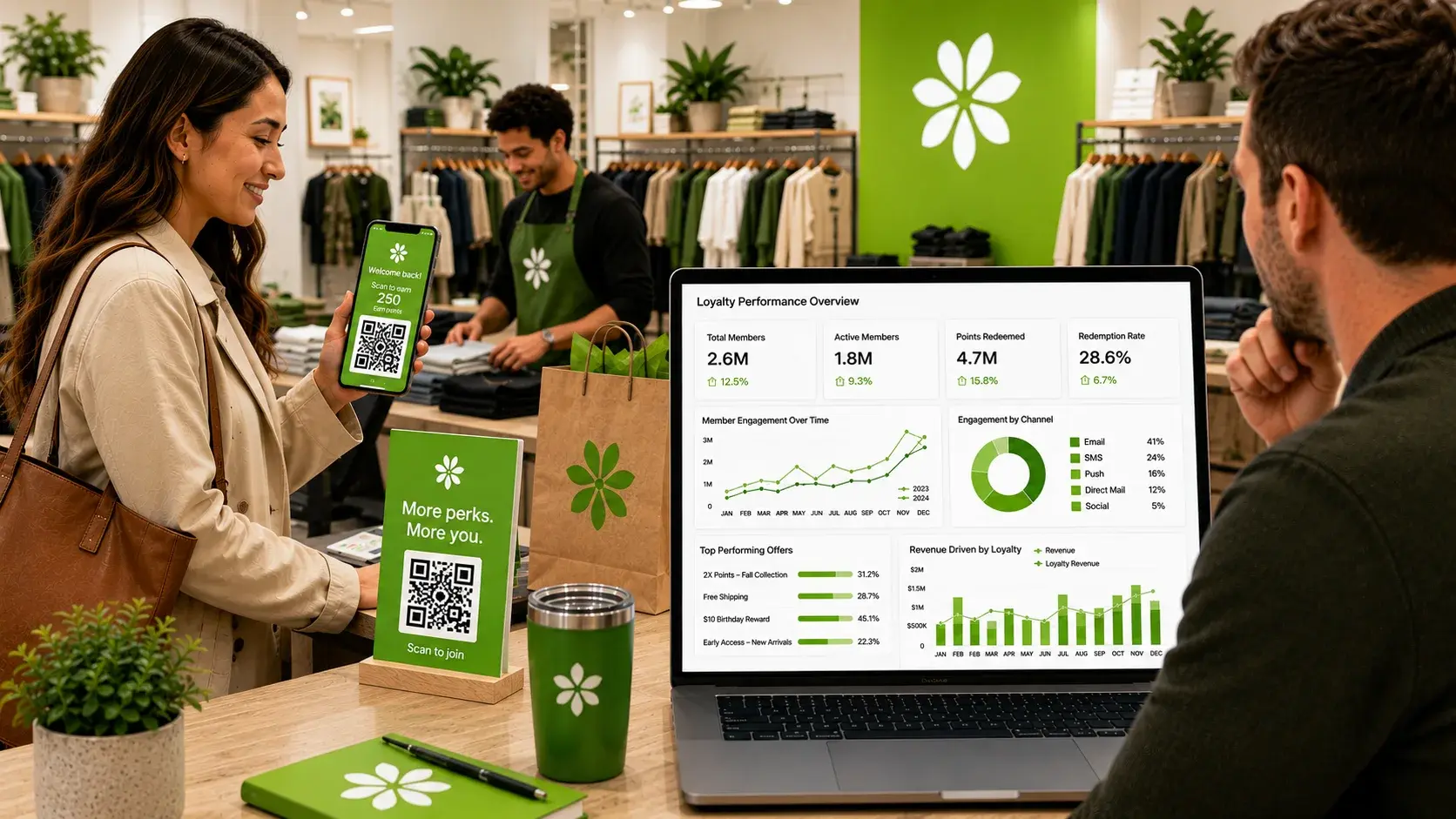
Loyalty programs for retailers help brands improve customer retention, strengthen engagement, and create more personalized customer experiences across physical and digital channels. Modern loyalty programs are no longer just rewards systems. They are competitive differentiation strategies designed to increase long-term customer value and strengthen brand relationships.
In today’s retail environment, loyalty programs increasingly influence how customers compare brands, engage across channels, and decide where to continue shopping.
The strongest retail customer loyalty programs connect customer data, personalization, omnichannel engagement, direct mail, and lifecycle marketing into one coordinated customer experience. Retailers that invest in connected loyalty strategies are often better positioned to improve retention, customer engagement, and long-term revenue performance.
Loyalty programs for retailers are customer retention strategies that use rewards, personalization, customer data, and omnichannel engagement to encourage repeat purchases and strengthen long-term customer relationships.
TL;DR
- Loyalty programs for retailers help improve customer retention and long-term customer value
- Modern retail loyalty strategies focus on personalization and connected customer experiences
- Omnichannel loyalty programs create more consistent engagement across physical and digital channels
- Customer data and loyalty analytics help improve targeting and engagement performance
- Loyalty and direct mail marketing strengthen customer engagement beyond digital channels alone
- Retail loyalty differentiation increasingly depends on customer experience, not just rewards
What Are Loyalty Programs for Retailers?
Loyalty programs for retailers are customer retention strategies designed to encourage repeat purchases and long-term engagement through rewards, personalization, and ongoing communication.
These programs often include:
- Points or rewards systems
- Personalized offers
- Member-exclusive promotions
- Birthday or milestone rewards
- Tier-based loyalty structures
- Loyalty direct mail campaigns
- Email and mobile messaging engagement
The reality is this: customers increasingly expect loyalty experiences that feel personalized and connected.
Retail loyalty programs that rely only on discounts or generic offers often struggle to create long-term engagement. Customers want experiences that reflect their preferences, shopping behavior, and relationship with the brand.
This is why modern retail loyalty strategy has shifted toward personalization, lifecycle engagement, and omnichannel customer experiences.

Why Are Loyalty Programs Important for Retailers Today?
Retail competition has become increasingly digital, personalized, and experience-driven.
Customers now interact with brands across:
- Physical stores
- Ecommerce websites
- Mobile messaging
- Direct mail
- Loyalty apps
- Social and paid media channels
The challenge is maintaining consistent customer engagement across every touchpoint.
Strong retail customer loyalty programs help brands:
| Loyalty Benefit | Business Impact |
| Improved customer retention | Increases long-term customer value |
| Personalized engagement | Improves customer experience |
| Omnichannel consistency | Strengthens brand relationships |
| Loyalty analytics | Supports better decision-making |
| Lifecycle marketing | Encourages repeat purchases |
| Customer insights | Improves targeting and relevance |
The goal is not simply to increase transactions. It is building stronger customer relationships over time.
Retailers increasingly use customer engagement strategy and analytics to better understand customer behavior and improve loyalty personalization.
Baesman’s customer loyalty services help brands connect customer data, personalization, direct mail, and omnichannel engagement into more measurable loyalty strategies.
How Do Loyalty Programs Help Retailers Differentiate?
Retail competition has become increasingly experience-driven.
Many retailers now offer similar products, pricing structures, and digital shopping experiences. Loyalty programs help brands differentiate by creating stronger customer relationships that competitors cannot easily replicate.
Strong retail loyalty differentiation often comes from:
- Personalized customer experiences
- Omnichannel engagement consistency
- Exclusive member benefits
- Lifecycle engagement strategies
- Data-driven personalization
- Connected physical and digital experiences
The strongest loyalty programs create emotional and behavioral engagement beyond transactional rewards alone.
This is especially important as customer acquisition costs continue to rise and customer expectations continue to evolve.
What Makes Retail Loyalty Programs Successful?
Successful loyalty programs create value for both the customer and the brand.
Customers expect loyalty experiences that feel:
- Relevant
- Personalized
- Convenient
- Consistent across channels
- Connected to their shopping behavior
Brands need loyalty strategies that support measurable customer engagement and long-term retention.
The strongest loyalty program engagement strategies typically focus on four areas:
| Loyalty Element | Why It Matters |
| Personalization | Improves relevance and engagement |
| Omnichannel integration | Creates connected experiences |
| Customer data strategy | Supports targeting and segmentation |
| Loyalty analytics | Improves optimization and measurement |
One common misconception is that loyalty programs succeed because of rewards alone.
The reality is that loyalty differentiation increasingly depends on customer experience, personalization, and engagement consistency.
Brands that connect loyalty strategy with broader customer engagement efforts often create stronger long-term retention performance.
Why Do Omnichannel Loyalty Programs Perform Better?
Customers no longer interact with retail brands through a single channel.
A customer may:
- Browse products online
- Visit a physical store
- Receive a personalized direct mail offer
- Open a loyalty email
- Redeem a reward through mobile messaging
- Make a purchase in-store
The experience needs to feel connected across every interaction.
This is why omnichannel loyalty programs continue to outperform disconnected engagement strategies.
Connected loyalty experiences help retailers:
- Improve customer convenience
- Deliver more relevant messaging
- Increase engagement consistency
- Strengthen repeat purchase behavior
- Improve retail loyalty member retention
Baesman’s email and mobile messaging (SMS) services, customer engagement strategy and analytics, and retail marketing services help brands create more connected omnichannel loyalty experiences.
How Does Personalization Improve Loyalty Program Engagement?
Personalized loyalty marketing helps brands deliver more relevant customer experiences based on behavior, preferences, and engagement history.
This may include:
- Product recommendations
- Personalized rewards
- Triggered engagement campaigns
- Loyalty milestone communications
- Re-engagement offers
- Store-specific promotions
The strongest loyalty program personalization strategies are powered by customer data.
Without accurate customer insights, loyalty messaging becomes inconsistent and less effective.
A strong loyalty program data strategy helps retailers:
- Segment customers more effectively
- Improve loyalty marketing automation
- Deliver more relevant messaging
- Track customer engagement trends
- Improve customer retention performance
Brands increasingly use loyalty analytics to understand which engagement strategies drive repeat purchases and long-term customer value.
Baesman explores this further in its resource on how to measure customer loyalty and the metrics that matter.
What Metrics Should Retailers Track in Loyalty Programs?
Retail loyalty analytics help brands measure customer engagement and long-term retention performance.
Common loyalty metrics include:
- Repeat purchase rate
- Loyalty member engagement
- Offer redemption rates
- Customer retention rate
- Incremental revenue
- Customer lifetime value
The goal is not simply enrollment growth. It is ongoing customer participation and measurable engagement over time.
Why Does Direct Mail Still Matter for Retail Loyalty Programs?
Direct mail continues to play an important role in loyalty marketing because it creates a physical customer interaction that digital channels alone cannot replicate.
When combined with personalization and customer data, loyalty and direct mail marketing become significantly more effective.
Examples of loyalty-focused direct mail campaigns include:
- Loyalty welcome kits
- Birthday rewards
- Tier upgrade notifications
- Personalized promotional offers
- Re-engagement campaigns
- VIP customer mailers
These campaigns often feel more intentional because they are tied directly to customer behavior and loyalty status.
For example:
- A customer receives a personalized loyalty postcard
- The mailer includes a QR code tied to a personalized landing page
- The customer redeems the offer online or in-store
- Engagement data connects back to the loyalty platform
This creates more measurable omnichannel customer engagement opportunities.
Baesman’s direct mail services help retailers connect personalization, loyalty engagement, and customer analytics into more integrated marketing strategies.
How Does Customer Data Support Retail Loyalty Differentiation?
Customer data has become foundational to modern loyalty strategy.
The strongest retail loyalty programs are powered by customer insights that help brands deliver more relevant and connected experiences.
A strong loyalty program data strategy helps retailers:
- Understand customer preferences
- Personalize engagement campaigns
- Improve lifecycle marketing
- Track retention trends
- Improve loyalty marketing automation
- Support omnichannel engagement strategies
The challenge is that many retailers still operate with disconnected systems across loyalty, CRM, ecommerce, email, and direct mail platforms.
When customer data is fragmented, loyalty experiences become inconsistent.
That fragmentation often leads to:
- Generic messaging
- Weak personalization
- Reduced engagement
- Lower customer retention
- Missed revenue opportunities
Retailers investing in connected customer data strategies are often better positioned to improve customer loyalty differentiation and long-term engagement performance.
Real-World Example: How Kate Spade Strengthened Customer Engagement
A strong example of connected loyalty and customer engagement strategy is Baesman’s work with Kate Spade.
Kate Spade needed a more coordinated approach to customer communications, loyalty engagement, and omnichannel marketing execution while maintaining a consistent customer experience across physical and digital channels.
Baesman helped support these efforts by connecting customer data, direct mail, digital engagement, and campaign execution into a more unified customer engagement strategy.
This allowed loyalty communications and personalized messaging to feel more connected throughout the customer journey.
The result was a more cohesive customer experience designed to strengthen customer engagement, retention, and long-term loyalty performance.
Explore the full scope of our work with Kate Spade
This reflects a broader shift happening across retail loyalty strategy. Customers increasingly expect brands to recognize preferences, engagement history, and shopping behavior across every channel.
What Do Retailers Often Get Wrong About Loyalty Programs?
One of the biggest mistakes retailers make is focusing too heavily on rewards while overlooking the broader customer experience.
Points alone rarely create long-term loyalty.
Customers are more likely to remain engaged when loyalty experiences feel:
- Personalized
- Connected across channels
- Relevant to their interests
- Convenient and easy to use
- Consistent across physical and digital experiences
Another common issue is underinvestment in customer-loyalty lifecycle marketing.
The customer journey does not end after enrollment.
Strong lifecycle engagement strategies include:
- Member onboarding
- Ongoing engagement campaigns
- Personalized retention messaging
- Re-engagement campaigns
- Tier progression communications
Common Retail Loyalty Program Mistakes
- Over-relying on discounts
- Underusing customer data
- Generic messaging across channels
- Disconnected customer experiences
- Weak lifecycle engagement strategies
- Limited personalization
Brands evaluating loyalty performance can also review:
When Do You Need Loyalty Program Consulting? 5 Signs to Know
Retailers looking to improve lifecycle engagement can also explore:
The Loyalty Lifecycle: Acquiring, Engaging, and Retaining Members
Why Do Loyalty Programs Need to Evolve in a Digital-First Retail Environment?
Customer expectations continue to evolve quickly.
Retailers are competing not only on products and pricing, but also on customer experience, convenience, and personalization.
The strongest loyalty programs increasingly focus on:
- Personalized loyalty marketing
- Connected customer experiences
- Omnichannel engagement
- Customer retention analytics
- Loyalty marketing automation
- Data-driven engagement strategies
The reality is this: loyalty programs perform best when they function as part of a broader customer engagement ecosystem rather than standalone rewards systems.
Retailers that integrate loyalty strategy, customer data, direct mail, email, analytics, and personalization into a single, coordinated experience are often better positioned to improve retention and long-term customer value.
Looking to Improve Retail Loyalty Program Performance?
Modern loyalty programs depend on more than rewards alone. Customer data, personalization, omnichannel engagement, lifecycle marketing, and operational coordination all influence long-term performance.
Baesman helps retailers connect loyalty strategy, customer analytics, direct mail, personalized engagement, and omnichannel marketing execution into more measurable customer retention programs.
Explore Baesman’s:
- Customer Loyalty Services
- Retail Marketing Services
- Customer Engagement Strategy & Analytics
- Direct Mail Services
FAQ: Frequently Asked Questions About Loyalty Programs for Retailers
What are loyalty programs for retailers?
Loyalty programs for retailers are customer retention strategies designed to encourage repeat purchases through rewards, personalized engagement, and ongoing customer communication.
Why are omnichannel loyalty programs important?
Omnichannel loyalty programs create connected customer experiences across physical stores, ecommerce, email, direct mail, and mobile messaging channels.
How does personalization improve loyalty engagement?
Personalization helps retailers deliver more relevant rewards, offers, and communications based on customer behavior and preferences.
Why is customer data important for loyalty programs?
Customer data supports segmentation, personalization, lifecycle marketing, and loyalty analytics that improve customer engagement and retention performance.
How does direct mail support loyalty programs?
Direct mail creates more tangible and personalized customer interactions that support loyalty engagement and omnichannel marketing strategies.
What makes a retail loyalty program effective?
Effective retail loyalty programs combine personalization, customer data, omnichannel engagement, lifecycle marketing, and measurable customer retention strategies.
Final Takeaway
Loyalty programs for retailers are no longer just reward systems. They are competitive differentiation strategies designed to improve customer retention, strengthen engagement, and create more connected customer experiences across physical and digital channels.
Retailers that connect loyalty strategy with customer data, personalization, direct mail, lifecycle marketing, and omnichannel engagement are often better positioned to improve long-term customer value and retention performance.
As retail competition becomes increasingly digital-first, brands that invest in connected loyalty experiences are often better equipped to strengthen customer relationships and improve long-term engagement performance.
If your retail brand is looking to improve customer loyalty, retention, and omnichannel engagement, explore Baesman’s customer loyalty services to see how connected loyalty strategies can support stronger customer relationships and measurable business growth.